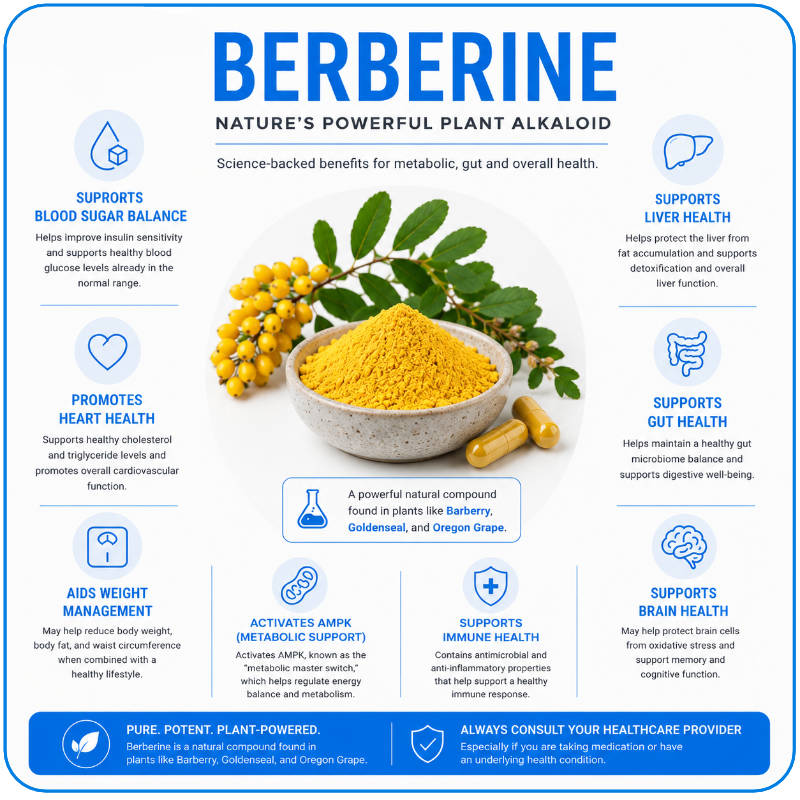
Berberine has become one of the most talked-about supplements for
blood sugar, weight, cholesterol, and gut support. Some of that
enthusiasm is justified. Some of it is not.
Berberine is one of those compounds that attracts both good
science and excessive marketing. It can be useful. It is not
magic. The real question is whether it matches the physiology in
front of us.
The practical frame:
berberine is best used as a tool inside a broader strategy, not
as a substitute for understanding the pattern.
Where berberine can genuinely help
Blood sugar regulation:
it can support insulin sensitivity and post-meal glucose
control in some people.
Lipid patterns:
it may help improve certain cholesterol and triglyceride
markers.
Some digestive applications:
there can be a role in selected microbial overgrowth or
infectious gut contexts.
PCOS-related metabolic work:
in some patients it may fit into a broader insulin-focused
strategy.
Where the hype gets ahead of the evidence
Berberine is often sold as a natural shortcut for weight loss, a
universal alternative to medication, or a catch-all metabolic
fix. That framing is too simple. It does not tell you why blood
sugar is unstable, whether the gut is inflamed, whether the
person is under-eating or sleeping poorly, or whether the real
issue is stress physiology rather than supplement selection.
Berberine has real applications, but it works best when those
applications are matched to the actual problem instead of to
internet hype.
Why supervision matters
Berberine can interact with medications, including some diabetes
drugs, anticoagulants, transplant medications, and other agents
processed through liver enzyme systems. It can also cause
gastrointestinal upset, cramping, or loose stools in some
people. That alone is enough reason not to treat it as benign
just because it is “natural.”
How I think about it clinically
I am most interested in berberine when there is a clear
metabolic or microbial reason to consider it and when it
complements the larger plan. Nutrition, meal rhythm, sleep,
training load, stress, and digestive context still matter more
than the supplement itself. Berberine can be useful, but only if
the rest of the strategy makes sense.