
Back to resources
Chronic Atrophic Gastritis: Pathophysiology, Emerging Therapies, and the Evidence for Chinese Herbal Medicine
A clinical deep dive into chronic atrophic gastritis, its major pathways, nutrient consequences, surveillance priorities, and the evidence boundaries around standardized herbal formulas.
Overview
Chronic Atrophic Gastritis (CAG) is a progressive inflammatory condition characterized by the loss of normal gastric glandular structures and their replacement by fibrous tissue or intestinal-type epithelium. Because it represents an important intermediate step in the cascade toward gastric neoplasia, understanding its underlying drivers, clinical manifestations, and the reality of current therapeutic options is vital for both patients and clinicians.
What Is Chronic Atrophic Gastritis?
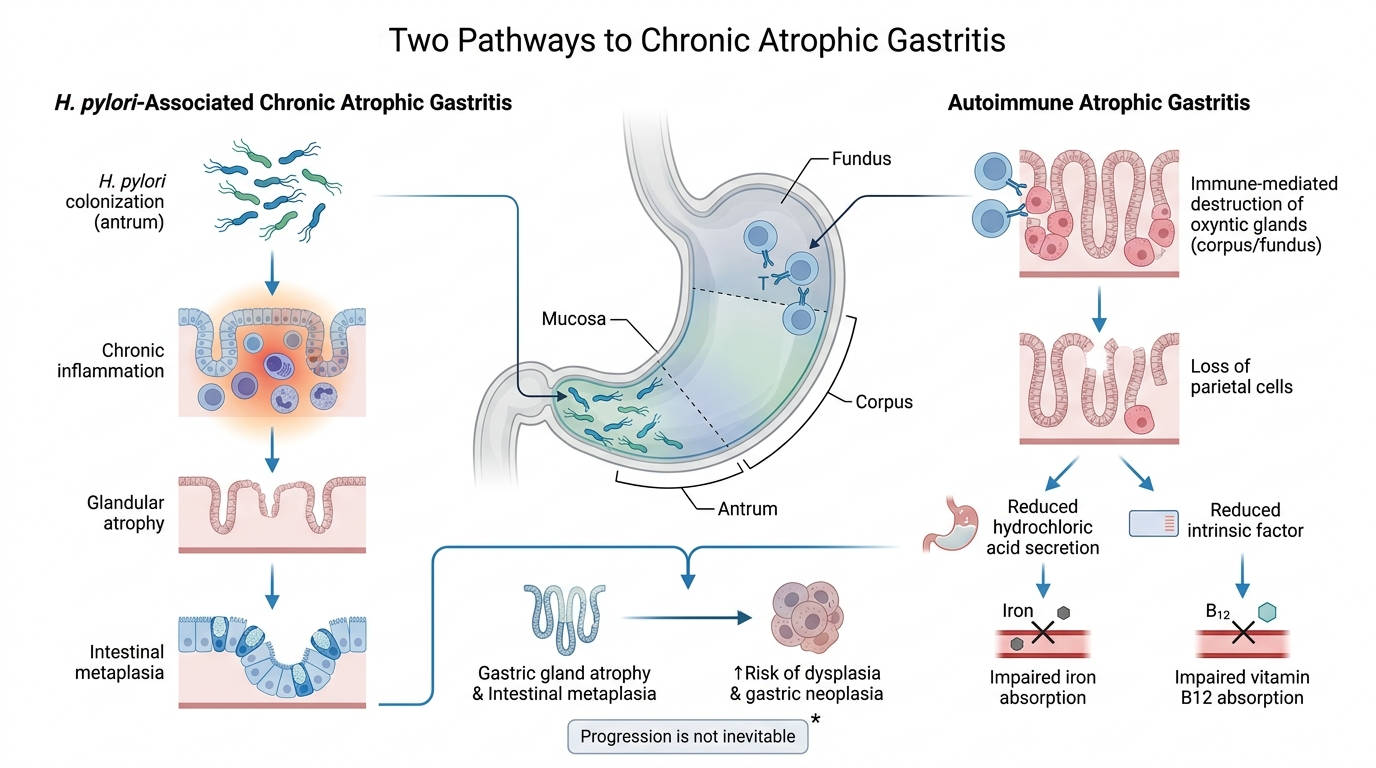
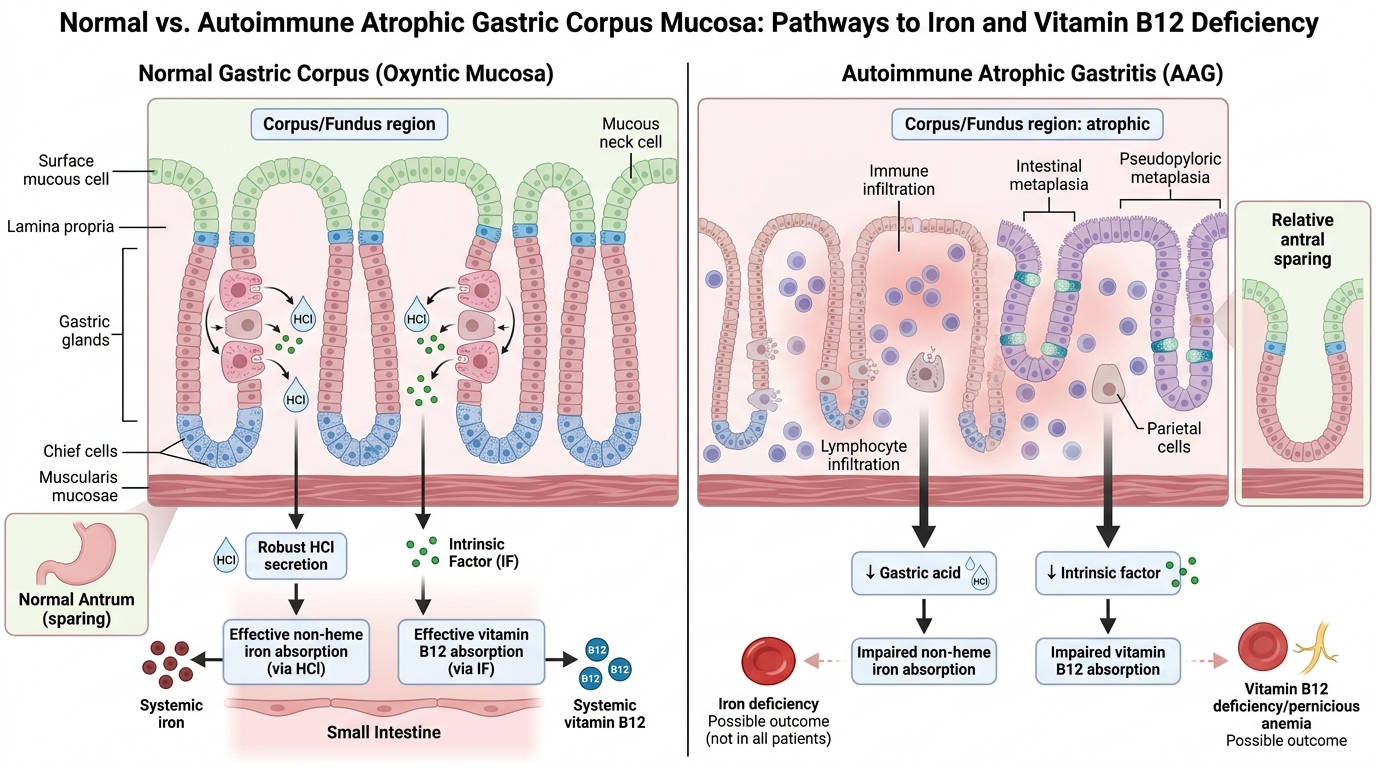
At its core, CAG involves longstanding inflammation that gradually destroys the parietal and chief cells residing within the stomach lining. Under healthy conditions, these specialized cells secrete hydrochloric acid and intrinsic factor - two substances required for protein digestion, iron solubility, and vitamin B12 absorption.
When chronic inflammation leads to mucosal atrophy, the body often attempts to repair the damaged tissue through a process known as intestinal metaplasia (IM), replacing native stomach lining cells with cells that resemble those of the small or large intestine.
Chronic inflammation -> mucosal atrophy -> intestinal metaplasia -> dysplasia or neoplasia risk.
Etiology: The Two Main Pathways
CAG typically develops through one of two primary pathways, each targeting distinct areas of the stomach.
- Environmental / Helicobacter pylori-associated gastritis: this is the most common form worldwide. Persistent H. pylori infection drives widespread inflammation, typically starting in the antrum, the lower stomach, and spreading toward the corpus, or body.
- Autoimmune atrophic gastritis (AAG / type A gastritis): a disease where autoantibodies target parietal cells and intrinsic factor. This process predominantly affects the corpus and fundus, sparing the antrum.
Key Symptoms and Diagnostic Red Flags
Early-stage CAG is often silent or presents with nonspecific upper gastrointestinal symptoms. As the disease advances and acid production diminishes, through hypochlorhydria or achlorhydria, characteristic clinical features emerge.
| Manifestation category | Symptoms and biomarkers | Underlying mechanism |
|---|---|---|
| Gastrointestinal | Postprandial fullness, early satiety, epigastric distress, bloating, or mild nausea. | Delayed gastric emptying and loss of digestive acid/pepsin dynamics. |
| Hematologic and neurologic | Fatigue, weakness, macrocytic anemia, pernicious anemia, microcytic anemia, or peripheral neuropathy. | Impaired absorption of vitamin B12, due to loss of intrinsic factor, and iron, due to reduced acid. |
| Systemic / autoimmune | Co-occurrence of Hashimoto's thyroiditis, type 1 diabetes, or vitiligo. | Shared autoimmune susceptibility, particularly in corpus-predominant AAG. |
Conventional Management Protocols
Standard clinical care focuses on addressing the root driver of inflammation, replacing missing nutrients, and screening for cellular changes over time.
- Eradication and targeted therapy: prompt treatment of underlying infections, such as H. pylori clearance, or management of concurrent gastrointestinal dysbiosis.
- Nutrient replacement: lifelong monitoring and supplementation of vitamin B12, whether sublingual or intramuscular, and elemental iron.
- Endoscopic surveillance and histologic staging: regular monitoring using validated staging frameworks such as OLGA (Operative Link for Gastritis Assessment) and OLGIM (Operative Link for Gastritis Assessment based on Intestinal Metaplasia) to grade atrophy and metaplasia severity.
Examining the Herbal Evidence: Standardized Formulas vs. Custom Pharmacopoeia
Interest in traditional botanical medicine and botanical extracts for chronic atrophic gastritis has grown significantly. Recent clinical trials evaluating specific, standardized patent formulations have demonstrated encouraging surrogate outcomes, including modest histologic improvements in mucosal atrophy and intestinal metaplasia scores.
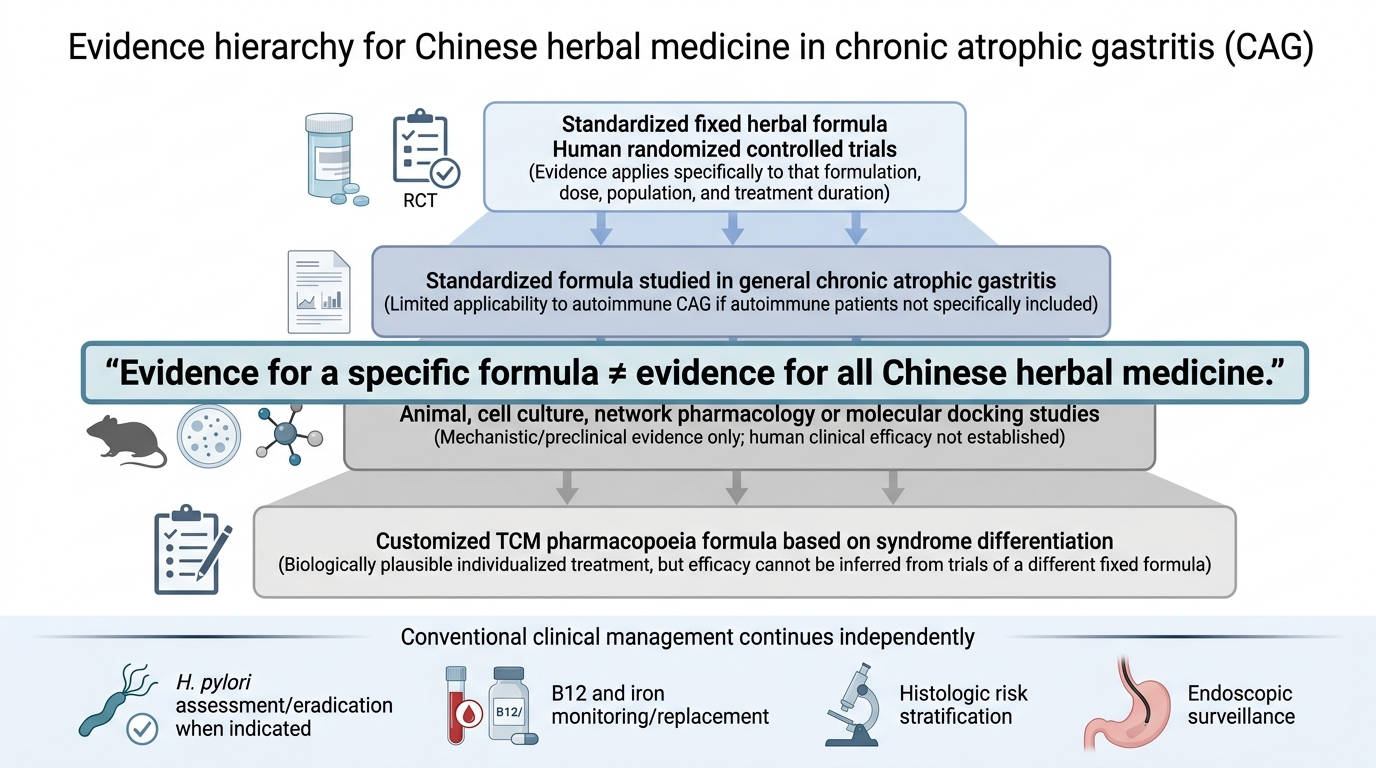
However, interpreting this body of research requires a careful distinction between fixed, studied formulations and non-standardized, custom prescriptions.
| Formula / intervention | Study design and cohort | Key findings | Critical clinical limitations |
|---|---|---|---|
| WW-1 / Qilianxiaopi Decoction | 2026 multicenter, randomized, double-blind, placebo-controlled trial (N=468, 24 weeks). | Modest improvements in corpus atrophy, intestinal metaplasia, and OLGA staging scores. | Broader CAG population studied; not a dedicated autoimmune gastritis (AAG) cohort. Corrected data requires careful verification. |
| Elian Granule | Multicenter, double-blind trial (N=239, 24 weeks) in H. pylori -negative patients (OLGA/OLGIM II-III). | Improved histologic scores for atrophy and intestinal metaplasia compared to control group. | Control group contained 5% active formula; 19% attrition rate; autoimmune etiology was not verified. |
| Weierkang | Double-blind RCT (N=108) vs. folate plus teprenone. | Symptom relief and localized histologic improvements at selected gastric sites. | Small, short-duration active-comparator trial with no autoimmune subgroup analysis. |
| Yiwei Xiaoyu | Small double-blind trial (N=72) vs. Weifuchun over 24 weeks. | Superior symptom relief and OLGIM improvements over active herbal comparator. | Lacked a true placebo control; small cohort size; non-autoimmune specific. |
| Piwei Peiyuan | Multicenter double-dummy trial (N=120) vs. Weifuchun. | Showed advantages in symptom scores and mucosal histology over comparator. | Active-controlled design limits conclusions regarding absolute therapeutic effect size. |
| Individualized TCM formulas | Multicenter RCT evaluating tailored formulas based on traditional syndrome differentiation. | Symptom improvement observed across arms, but no primary histologic advantage over standard care. | Explicitly excluded type A, or autoimmune, gastritis, limiting direct application to AAG. |
Methodological Considerations in Botanical Research
While systematically reviewed patent formulas such as Weifuchun, Banxia Xiexin Tang, or Moluodan frequently report positive symptom responses, systematic meta-analyses highlight important methodological considerations across the current literature.
- Heterogeneity and study quality: many existing studies feature small sample sizes, indirect comparisons, or variable allocation concealment.
- Extrapolation boundaries: evidence derived from broad H. pylori -negative or environmental CAG cohorts cannot be directly applied to corpus-predominant autoimmune atrophic gastritis.
- Fixed formulations vs. custom blends: modifying a multi-herb compound or substituting ingredients creates a distinct preparation whose biological effects cannot be assumed from trials of the original formula.
Practical Clinical Takeaways and Conclusion
For patients exploring adjunctive options alongside conventional gastrointestinal care:
- Core monitoring remains essential: botanical protocols do not replace necessary lab monitoring (B12, ferritin/iron, CBC), H. pylori screening, or endoscopic surveillance (OLGA/OLGIM staging).
- Role as adjunctive support: evidence-aligned botanical formulas are best viewed as time-limited, symptom-directed adjuncts rather than proven curative agents for autoimmune mucosal reversing.
- Sequence care thoughtfully: baseline evaluations and active targeted treatments, such as antimicrobial or dysbiosis regimens, should be completed prior to initiating adjunctive therapies to establish a clear baseline.
Evidence for an intervention in chronic atrophic gastritis should not automatically be interpreted as evidence for autoimmune atrophic gastritis.
The underlying disease mechanism, anatomical distribution, natural history, and therapeutic target differ.
Medical References
- Yang Y, et al. Efficacy of Chinese medicine WW-1 in managing gastric atrophy and intestinal metaplasia in patients with chronic atrophic gastritis: a multicenter, randomized, double-blind, placebo-controlled trial. Pharmacological Research. 2026. PubMed
- Yang Y, et al. Corrigendum to "Efficacy of Chinese medicine WW-1 in managing gastric atrophy and intestinal metaplasia in patients with chronic atrophic gastritis: a multicenter, randomized, double-blind, placebo-controlled trial". Pharmacological Research. 2026. DOI: 10.1016/j.phrs.2026.108262
- Jia Q, et al. Efficacy and safety of traditional Chinese medicine Elian Granule for chronic atrophic gastritis: a multi-center, randomized, double-blind, placebo-controlled study. Frontiers in Pharmacology. 2025. DOI: 10.3389/fphar.2025.1545313
- Chen X, et al. A randomized double-blind clinical trial of Weierkang pills for the treatment of chronic atrophic gastritis. Journal of Clinical Gastroenterology. 2023. DOI: 10.1097/mcg.0000000000001663
- Chen WQ, et al. Yiwei Xiaoyu granules for treatment of chronic atrophic gastritis with deficiency syndrome of the spleen and stomach. World Journal of Clinical Cases. 2024. DOI: 10.12998/wjcc.v12.i13.2201
- Zhang Y, et al. Efficacy and safety of Piwei Peiyuan Prescription in the treatment of chronic atrophic gastritis: a multicenter, double-blind, double-simulated, randomized, controlled clinical trial. Medicine. 2024. DOI: 10.1097/md.0000000000037981
- Zhang T, et al. Chinese herbal compound prescriptions combined with Chinese medicine powder based on traditional Chinese medicine syndrome differentiation for treatment of chronic atrophic gastritis with erosion: a multi-center, randomized, positive-controlled clinical trial. Chinese Medicine. 2022. DOI: 10.1186/s13020-022-00692-7
- Wang L, et al. Efficacy and safety of Weifuchun tablet for chronic atrophic gastritis: a systematic review and meta-analysis. PLoS ONE. 2023. DOI: 10.1371/journal.pone.0284411
- Yu Y, et al. Clinical efficacy of moluodan in the treatment of chronic atrophic gastritis: a protocol for systematic review and meta-analysis. Medicine. 2022. DOI: 10.1097/md.0000000000032303
- Cao Y, et al. Efficacy of Banxia Xiexin decoction for chronic atrophic gastritis: a systematic review and meta-analysis. PLoS ONE. 2020. DOI: 10.1371/journal.pone.0241202
- Dai YK, et al. The efficacy of Jianpi Yiqi therapy for chronic atrophic gastritis: a systematic review and meta-analysis. PLoS ONE. 2017. DOI: 10.1371/journal.pone.0181906
- Ren BP, et al. Unveiling the therapeutic effects of traditional Chinese patent medicines: a network meta-analysis on chronic atrophic gastritis. Medicine. 2025. DOI: 10.1097/md.0000000000041690
- Wu Y and Hu L. Therapeutic effect and safety of Wei-Fu-Chun in the treatment of chronic atrophic gastritis: a network meta-analysis. Frontiers in Pharmacology. 2025. DOI: 10.3389/fphar.2025.1693427
- Shah SC, et al. AGA Clinical Practice Update on the Diagnosis and Management of Atrophic Gastritis: Expert Review. Gastroenterology. 2021. DOI: 10.1053/j.gastro.2021.06.078
- Castellana C, et al. Autoimmune Atrophic Gastritis: A Clinical Review. Cancers. 2024. PubMed
Illustrations with BioRender and FigureLabs - Fact checked with ChatGPT for Clinicians