How functional medicine and Traditional Chinese Medicine can help
frame resilience against extreme heat, from thermoregulation and
hydration to sleep, stress physiology, and mental steadiness.
As global temperatures continue to shatter records, heatwaves
are no longer just seasonal discomforts. They are major public
health events. Public health infrastructure rightly focuses on
emergency response, air conditioning, and urban cooling centers,
but an individual's internal physiology still influences
how well they withstand extreme thermal stress.
To build true biological resilience, two holistic frameworks are
especially useful: Traditional Chinese Medicine and functional
medicine. Both look at the human body as an ecosystem that is
deeply connected to the larger environment, and both offer a
proactive way to think about surviving an overheating world.
The core idea:
heat resilience is not only about cooling the room. It is also
about supporting the cardiovascular, cellular, digestive, fluid,
and nervous-system pathways that help the body regulate its
internal climate.
The double threat: climate heat meets cellular stress
When a heatwave hits, the human body has to work overtime to
keep core temperature stable. That process heavily taxes the
cardiovascular system and can increase systemic inflammatory
burden.
Functional medicine perspective:
extreme heat acts as a major environmental stressor. It can
raise cortisol, increase oxidative stress, and disturb the gut
lining, potentially amplifying immune activation.
TCM perspective:
heat is one of the Six Exogenous Pathogens. When external Heat
combines with internal imbalances, it can transform into toxic
heat or consume the body's Yin, the cooling, hydrating,
and grounding fluids.
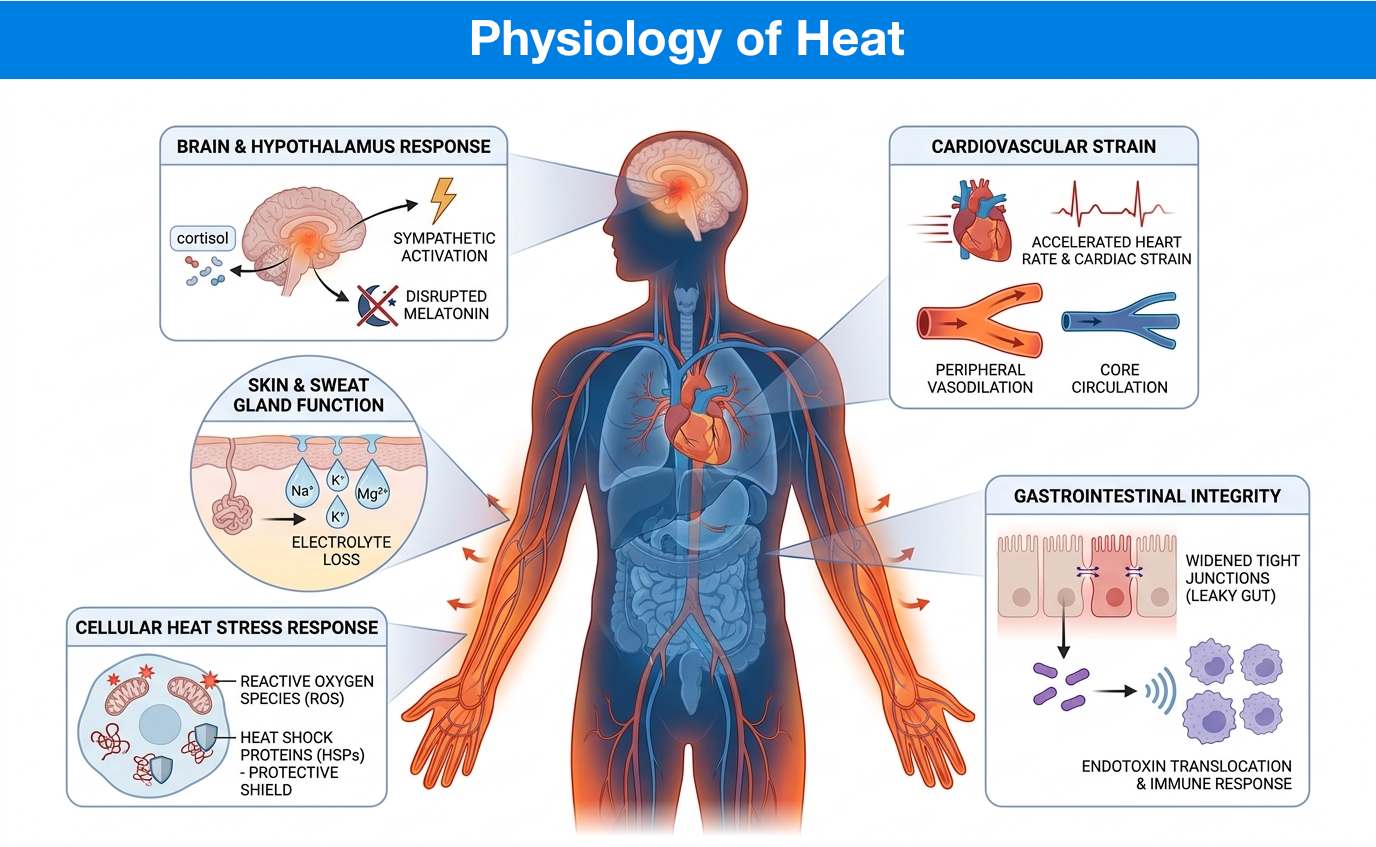
Extreme heat affects multiple systems at once: hypothalamic
signaling, cardiovascular strain, sweating and electrolyte
loss, cellular oxidative stress, and gut-barrier integrity.
Traditional Chinese Medicine: clearing heat and protecting Yin
For thousands of years, TCM has conceptualized health as harmony
between the human microcosm and the environmental macrocosm.
During a heatwave, the clinical goal is simple: clear external
heat, resolve dampness, and replenish fluids.
Cooling herbs and teas:
instead of relying only on ice water, which TCM may view as
disruptive to digestive Qi, practitioners often use cooling
botanicals such as chrysanthemum, peppermint, and mung bean
tea.
Acupuncture for thermoregulation:
points such as Large Intestine 11, located near the elbow
crease, are traditionally used to clear heat and support
autonomic regulation.
Dietary adjustments:
cooling foods such as watermelon, cucumber, and celery can
help replenish fluids naturally without overwhelming
digestion.
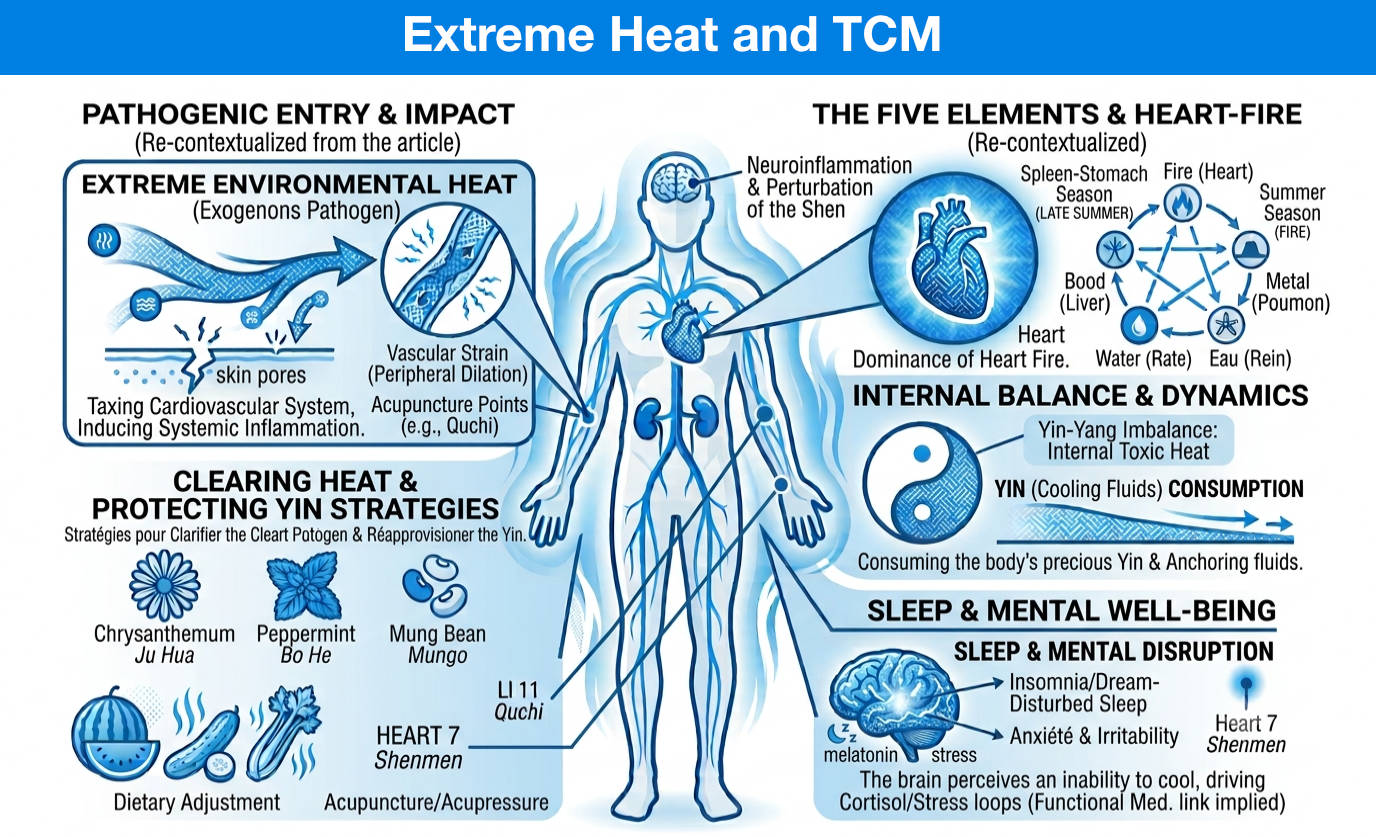
The TCM map organizes extreme heat through pathogenic Heat,
Heart Fire, Yin-fluid depletion, disturbed Shen, and practical
cooling strategies.
Functional medicine: cellular and vascular adaptation
Functional medicine takes a systems-biology approach, asking how
environmental factors interact with genetic, metabolic,
vascular, and physiological pathways. To prepare for extreme
heat, the focus is on fortifying the systems that help keep us
cool.
Cardiovascular support and electrolytes:
sweating flushes minerals such as magnesium, potassium, and
sodium. Balanced electrolytes can support cell membrane
voltage, vascular function, and heat-cramp prevention.
Mitochondrial resilience:
mitochondria are sensitive to thermal stress. Nutrients such
as CoQ10, alpha-lipoic acid, and vitamin C may help buffer
oxidative stress when the body is working hard to cool itself.
Heat shock proteins:
these molecular chaperones protect cellular proteins under
thermal strain. Controlled hormetic exposure, such as brief
sauna or hot-bath use during cooler months, may help prime
these adaptive pathways.
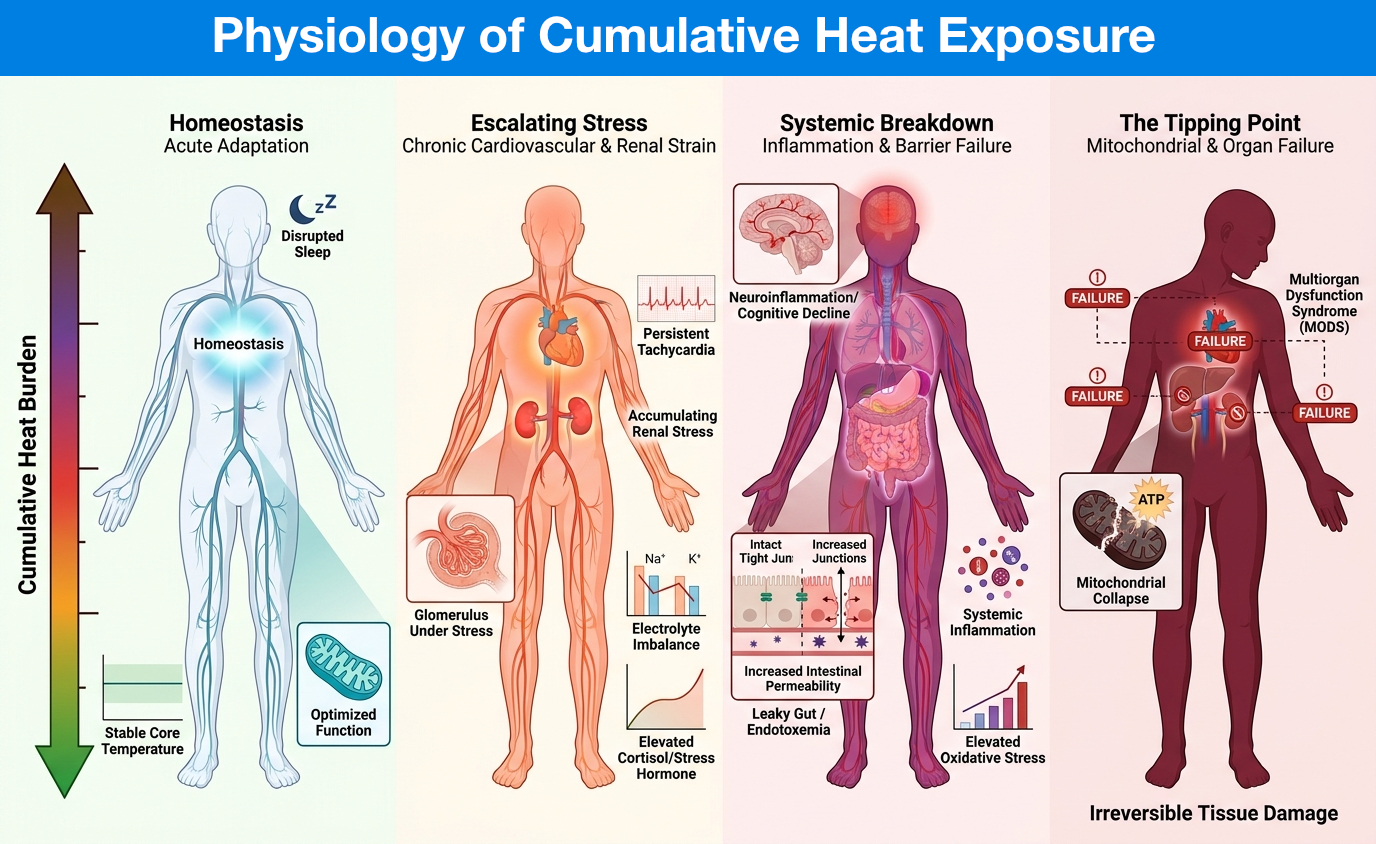
Cumulative heat exposure can move from short-term adaptation
toward cardiovascular and renal strain, inflammatory burden,
barrier failure, and eventually tissue-level breakdown.
The invisible toll: heat, sleep, and mental well-being
Extreme heat does not only exhaust the body. It also disrupts
the brain. Rising nighttime temperatures make it harder for core
temperature to drop, and that temperature drop is one of the
biological prerequisites for deep, restorative sleep.
Chronic sleep disruption, thermal discomfort, and physiologic
strain can contribute to anxiety, irritability, brain fog, and
emotional volatility. TCM and functional medicine describe this
pattern with different languages, but the overlap is clinically
useful.
TCM: calming the disturbed Shen
In Chinese medicine, mental health and sleep are closely tied to
Shen, a concept that includes spirit, consciousness, and
emotional vitality. Shen is said to reside in the Heart, and
summer is governed by the Fire element.
Heart Fire:
when external climate heat dominates, it can over-activate
internal Heart Fire.
Symptom profile:
when Fire disturbs the Shen, people may experience insomnia,
vivid dreams, acute anxiety, agitation, or a shorter temper.
Clinical direction:
TCM may use points such as Heart 7, also called Shenmen, and
cooling, spirit-calming botanicals such as sour date seed and
lily bulb to nourish Heart Yin and help the mind settle.
Functional medicine: neuroinflammation and cortisol spikes
Functional medicine looks at similar symptoms through circadian
biology, neurochemistry, inflammation, and stress physiology.
Circadian disruption:
the body relies partly on a drop in ambient temperature to
support melatonin production. A hot bedroom can fracture sleep
and keep nighttime cortisol elevated.
Neuroinflammation:
high ambient heat may affect gut and blood-brain-barrier
permeability, allowing inflammatory signals to alter
neurotransmitter balance and contribute to fogginess,
lethargy, and anxiety.
Nervous-system support:
strategies may include magnesium glycinate, low-dose melatonin
when appropriate, L-theanine, hydration, cooling routines, and
reducing avoidable inflammatory load.
A unified strategy for a warmer world
As climate change accelerates, relying only on reactive
emergency interventions will leave many people vulnerable.
Pairing the ecosystem-based wisdom of TCM with the molecular and
systems insights of functional medicine can help shift the frame
from passive vulnerability toward active, biological climate
resilience.
Strategy
Traditional Chinese Medicine
Functional Medicine
Primary goal
Clear pathogenic heat; nourish Yin and fluids.
Minimize oxidative stress; maintain electrolyte and
vascular stability.
Hydration
Herbal infusions such as chrysanthemum or mint; avoid
digestive cold shock.
Mineral-dense formulas with balanced sodium and
potassium ratios.
Cellular defense
Damp-heat clearing botanicals, selected to match the
person's pattern.
Antioxidants and mitochondrial support to protect cells
under thermal strain.
The practical task is to cool both the external environment and
the internal terrain that has to adapt to it.