
Back to resources
The Art and Science of Duì Yào: Unveiling Biochemical Synergies
Deep dive around herb pairings, classic formula logic, and the modern biochemical language that helps explain why these combinations work.
Introduction
Here I dive into the fascinating world of botanicals and one of my favorite parts of traditional medicine, exploring the intricate balance between ancient wisdom and modern scientific understanding. This article spotlights Duì Yào (对药), a unique practice within Traditional Chinese Medicine that exemplifies the profound art and science of combining botanicals.
Duì Yào , often translated as paired herbs or dyadic medicinals , refers to the strategic combination of two specific herbs to achieve a synergistic therapeutic effect. This practice goes beyond simply mixing ingredients. It is about understanding the subtle interplay of their individual properties to create a more potent and balanced outcome than either herb could achieve alone.
What makes this subject so compelling is that contemporary biochemical research is beginning to unravel the scientific basis behind these age-old pairings, giving us a richer way to talk about clinical wisdom that was already embedded in the tradition.
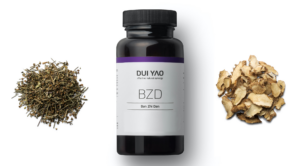
Duì Yào is not just about combining two herbs. It is about shaping direction, potency, balance, and tolerance through relationship.
The Art of Pairing: More Than the Sum of Its Parts
At its heart, Duì Yào is an art form honed over centuries of empirical observation and clinical experience. TCM practitioners meticulously select pairs of herbs based on their energetic properties, flavors, actions, and the specific disease patterns they aim to address.
The goal is often to:
- Enhance efficacy: one herb may boost the primary therapeutic action of the other.
- Mitigate toxicity or side effects: a second herb can neutralize or soften the undesirable effects of the first.
- Broaden therapeutic scope: the combination can address multiple aspects of a complex condition at once.
- Guide actions to specific areas: some pairings help direct the medicinal effects toward a particular organ, tissue, or channel.
Very often, Duì Yào forms the basis of classic formulas. The pair acts almost like a clinical hinge, giving the larger prescription its central rhythm and strategy.
Unveiling the Science: Biochemical Relationships and Synergies
Modern scientific inquiry is providing compelling evidence for the biochemical underpinnings of Duì Yào . Researchers are using advanced analytical techniques to identify the active compounds within these herbal pairs and understand how they interact at a molecular level.
Some of the most interesting mechanisms include:
- Pharmacokinetic modulation: one herb can influence the absorption, distribution, metabolism, or excretion of active compounds from its partner.
- Pharmacodynamic synergism: compounds from two herbs can act through different but complementary mechanisms, producing a greater overall therapeutic effect.
- Multi-target action: paired herbs often engage several biological pathways at the same time, which is particularly relevant in chronic and complex disease.
- Detoxification and protection: one herb may reduce toxicity, oxidative burden, or other adverse effects associated with the other.
- Enhanced solubility and stability: in some cases, one herb improves the availability or resilience of active compounds from its partner.
The emerging science does not replace traditional pairing logic. It gives us a second language for describing why the old logic still holds.
Classic Examples of Duì Yào in Clinical Context
Xiao Yao San is an example of a formula that contains a harmonizing Duì Yào pair that both reduces excess and nourishes deficiency. Xiao Yao San's Chai Hu soothes the Liver, while Bai Shao nourishes the Blood, helping keep movement and containment in better relationship.
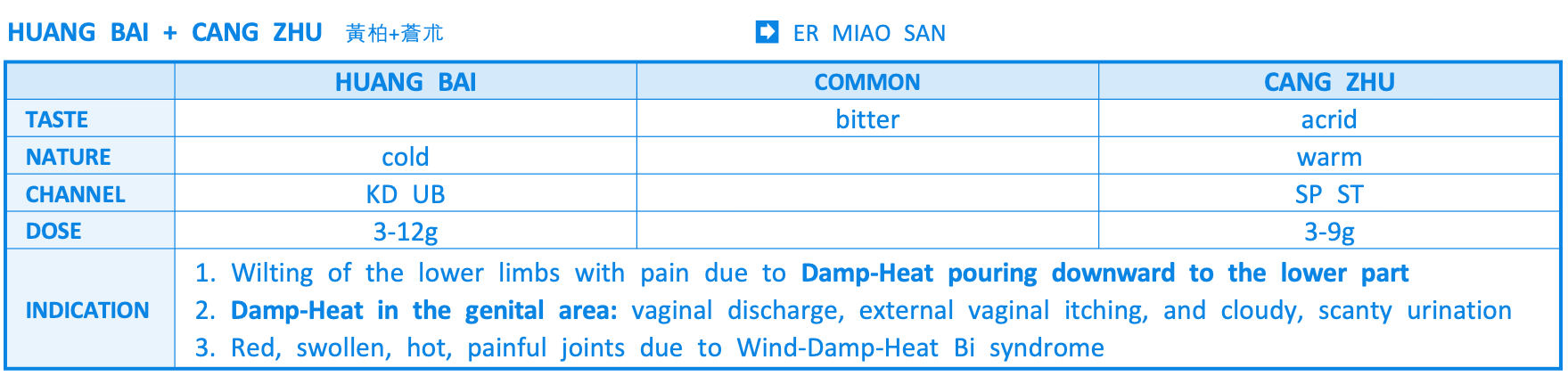
Er Miao San is another clear example. It is comprised of just two herbs, Huang Bai and Cang Zhu . Huang Bai clears heat and dries damp but is bitter and cold. Cang Zhu harmonizes because it is spicy, warm, and able to dry dampness. Used together as a Duì Yào pair, they clear heat with swelling and pain in conditions such as rheumatic eczema, gout, and lower-body damp-heat patterns.
Consider a classic tonic pair
One common pairing is Huang Qi ( Astragalus membranaceus ) and Dang Shen ( Codonopsis pilosula ). Traditionally, this pair is used to tonify Qi and strengthen the Spleen and Lungs.
- Huang Qi is rich in astragalosides and polysaccharides, known for immunomodulatory, anti-inflammatory, and antioxidant effects.
- Dang Shen contains saponins and polysaccharides that contribute to adaptogenic and immune-supportive actions.
From a biochemical perspective, studies suggest that combining these two herbs may lead to enhanced immune regulation, improved energy metabolism, and better functional expression of their active compounds, leading to a more robust Qi-tonifying effect.
The Future of Duì Yào Research
As scientific tools become more sophisticated, we can expect even deeper insights into the biochemical intricacies of Duì Yào . Proteomics, metabolomics, and network pharmacology are particularly promising because they allow researchers to map out the complex interactions between herbal compounds and biological systems.
This research does more than validate ancient wisdom. It opens the door to developing new, highly effective, and increasingly personalized herbal formulations while still respecting the classical logic from which these pairings emerged.
Duì Yào stands as a testament to the profound understanding of nature's pharmacy cultivated over millennia. By bridging traditional knowledge and modern science, we gain a more complete picture of how powerful plant synergies can support health and healing.