
Back to resources
LDL particle size and number
Standard cholesterol panels are often too shallow. LDL-C can be useful, but it does not tell you enough about how cholesterol is actually packaged and how much atherogenic traffic is moving through the bloodstream.
Why standard LDL-C is incomplete
In order for cholesterol to travel through the bloodstream, it has to be packaged into lipoprotein particles. Those particles carry fats, cholesterol, and proteins, and their behavior matters just as much as the cholesterol content they contain.
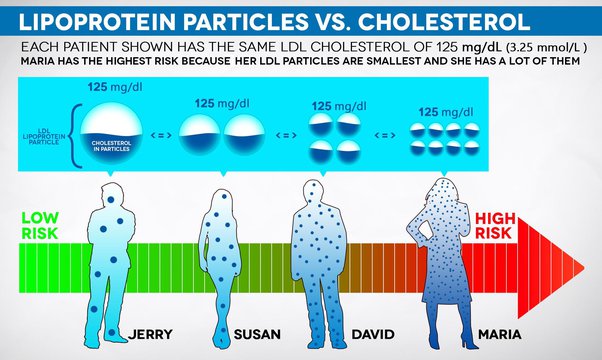
Most people are familiar with LDL cholesterol, the so-called “bad” cholesterol. But measuring LDL-C alone does not tell you enough about how that cholesterol is distributed. It does not tell you how many particles are present or how large or dense they are.
The cholesterol payload matters, but the number of vehicles on the road often matters more.
LDL particle size
Larger LDL particles are generally less likely to damage blood vessels than smaller, denser ones. Small dense LDL is more strongly associated with atherogenic risk.
So for particle size , bigger is generally better. That does not mean large LDL particles become harmless in any quantity, but it does help refine how we interpret risk.
LDL particle number
LDL particle number is one of the most important advanced lipid markers because it reflects how many atherogenic particles are actually circulating. Even when the particles are relatively large, having too many of them can still raise risk.
That is why for LDL particle number , lower is better. In practical terms, LDL-P often tracks risk more clearly than a basic LDL-C value.
| Marker | What it tells you | Practical takeaway |
|---|---|---|
| LDL-C | The amount of cholesterol carried within LDL | Useful, but incomplete on its own |
| LDL particle size | Whether particles are larger and fluffier or smaller and denser | Small dense LDL tends to be more concerning |
| LDL particle number (LDL-P) | How many atherogenic LDL particles are circulating | Often the most important advanced marker in this group |
When LDL-C and LDL-P do not match
In some people, LDL-C and LDL-P track together closely. In others, especially those with insulin resistance, prediabetes, diabetes, or other cardiometabolic dysfunction, they can diverge.
That mismatch matters. A person may have an LDL-C that does not look especially alarming on a standard panel, while their LDL particle number still suggests more atherogenic burden than expected.
This is one reason I think of advanced lipid testing as part of the “hidden iceberg” of metabolic risk. It helps detect trouble before the standard picture looks dramatic.
How I test it
LabCorp's NMR LipoProfile With Lipids , which includes LDL-P, LDL size, small LDL-P, HDL particle data, an insulin-resistance score, and the standard lipid panel.
That kind of testing makes more sense for people with a personal or family history of cardiovascular disease, metabolic dysfunction, a confusing standard lipid profile, or a desire to understand cardiometabolic risk in a more granular way.
Once you have the deeper data, the response is not automatically medication. Depending on the pattern, the next step may be food-plan work, exercise, sleep, stress physiology, targeted supplements, or medication when truly appropriate.