
Back to resources
The Lung-Gut Axis: An Integrated Perspective from Functional and Chinese Medicine
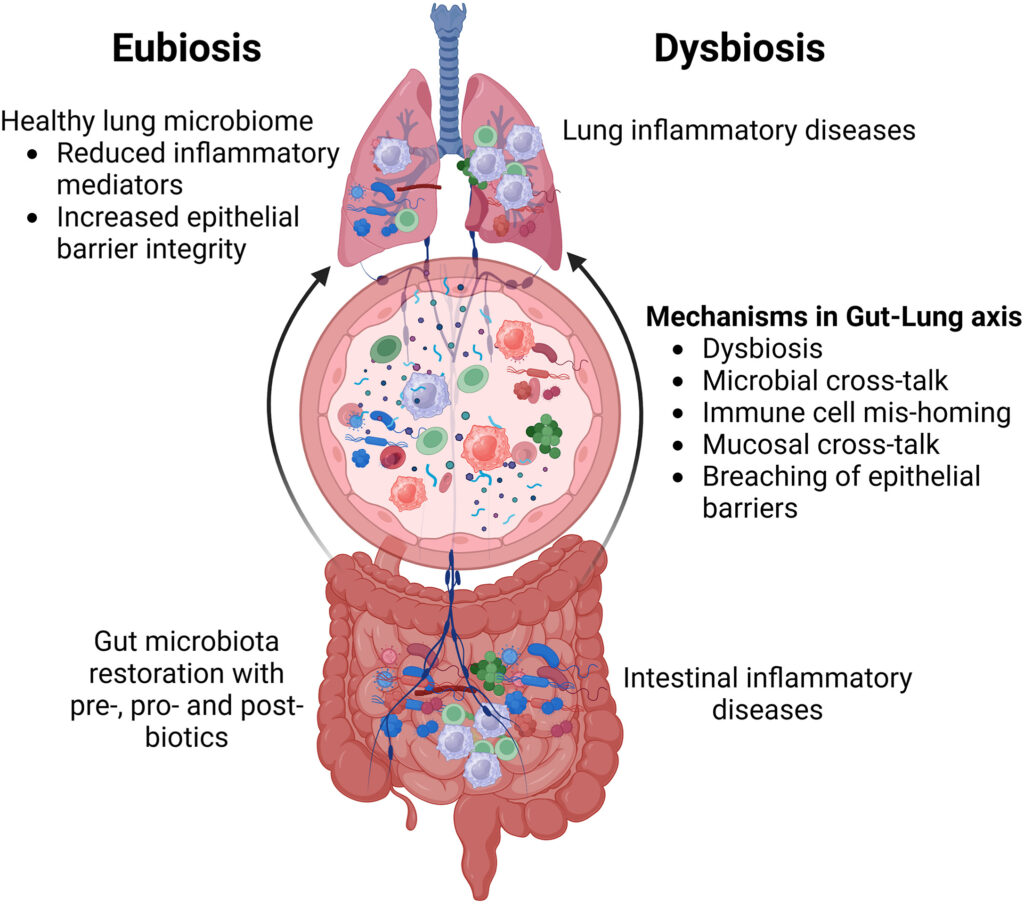
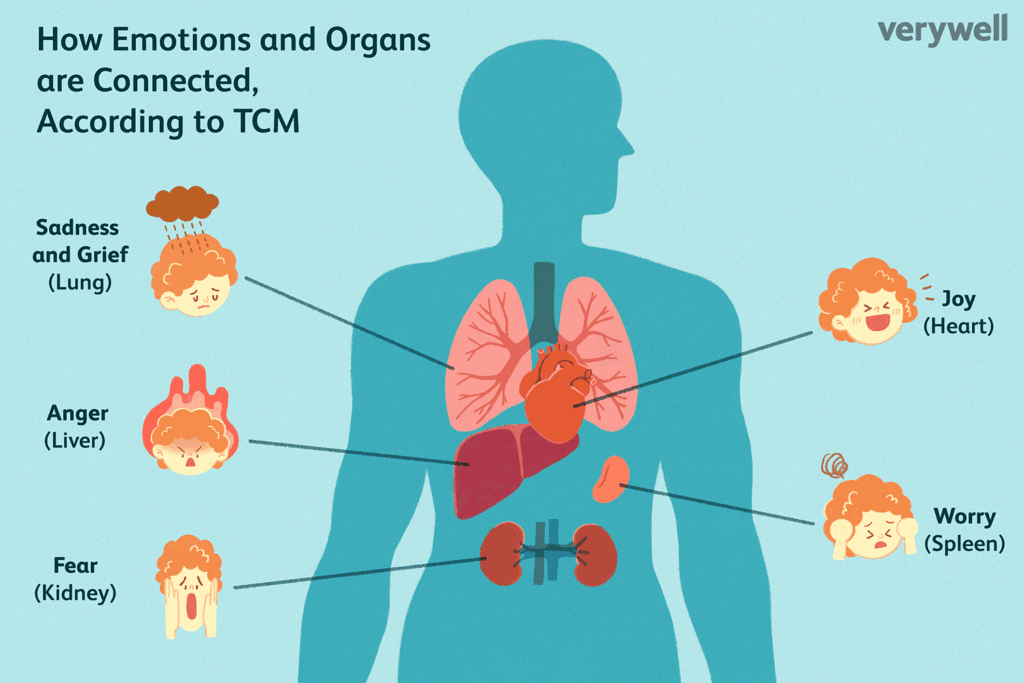
Deep dive about the axis structure, including the microbiome and emotion illustrations, the functional medicine and TCM comparison tables, and the asthma and sinusitis protocols.
The Lung-Gut Axis
The Lung-Gut Axis is a bidirectional communication pathway linking the respiratory and gastrointestinal systems through the microbiota, mucosal immunity, metabolites, and inflammatory signaling. Functional Medicine and Traditional Chinese Medicine each offer a distinctive way of understanding this connection, and in many ways the two models line up remarkably well.
Modern science increasingly maps this relationship through short-chain fatty acids, barrier integrity, and common mucosal immunity. TCM has long treated the same terrain through the relationship between the Lung and Large Intestine, as well as the supporting role of the Spleen in nourishing the Lung.
Lung health does not begin and end in the chest. It is deeply shaped by digestion, elimination, immune signaling, and the quality of the body's internal terrain.
Functional Medicine: The Microbiome and Systemic Immunity
Functional Medicine views the lung-gut axis through the lens of biochemical and immunologic crosstalk between the gut and the lungs.
Key Mechanisms
- The microbiome: the gut houses the body's largest and most diverse microbial community, and dysbiosis can affect distant organs, including the lungs.
- The lung microbiome: the lungs are not sterile; they contain a smaller but meaningful microbiome influenced by the upper airways and gut-derived signals.
- Microbial metabolites: short-chain fatty acids such as butyrate, propionate, and acetate travel through the circulation and help regulate immune responses in the lungs.
- Barrier integrity: when the intestinal lining becomes more permeable, lipopolysaccharides and inflammatory molecules can escape into circulation and amplify lung inflammation.
- Common mucosal immunity: the gut and lungs share migratory immune pathways, including secretory IgA and broader mucosal signaling.
Functional Medicine Interventions
- Dietary intervention: a diverse whole-food diet rich in fermentable fiber and polyphenols to promote SCFA production.
- Probiotics and prebiotics: targeted use of beneficial organisms and the fibers that feed them.
- Postbiotics: direct use of microbial metabolites such as butyrate when clinically useful.
- Barrier support: nutrients like L-glutamine, zinc, and vitamin D to support mucosal integrity.
Traditional Chinese Medicine: Organ Interconnection
TCM has recognized the functional relationship between the lungs and the digestive system for millennia through the network of Zang-Fu relationships.
The Lung and Large Intestine
In TCM, the Lung is paired with the Large Intestine in an interior-exterior relationship. The Lung's descending function supports bowel movement and fluid distribution, while healthy elimination helps the Lung descend and diffuse Qi smoothly.
- Physiology: proper Lung Qi descent supports stool movement and fluid handling.
- Pathology: failure of Lung Qi to descend can lead to cough, asthma, or constipation, while chronic bowel stagnation can impair respiration.
- Psychology: the Lung is associated with sadness and grief, while difficulty "letting go" often appears through both emotional and bowel patterns.
The Spleen and the Lung
According to Five Element theory, the Spleen is the mother of the Lung. The Spleen transforms food into usable Qi and fluids, sending nourishment upward to support the Lung. When digestion is weak, Dampness and Phlegm accumulate and can obstruct the respiratory system.
TCM Interventions
- Regulating digestion: strengthening Spleen Qi and resolving Dampness or Phlegm with formulas such as Liu Jun Zi Tang.
- Harmonizing exterior-interior: using formulas that address both the Large Intestine and Lung to support proper Qi descent.
- Acupuncture: regulating Spleen, Stomach, and Large Intestine channels in order to indirectly clear Lung pathology.
An Integrated Approach
Functional Medicine and TCM align around a central idea: lung health begins in the gut. One language speaks in terms of microbial diversity, barrier integrity, and short-chain fatty acids. The other speaks of Spleen transformation, Dampness, Phlegm, and the Lung-Large Intestine relationship.
Table 1. Functional Medicine and TCM perspectives on the lung-gut axis
| Component | Functional Medicine perspective | Traditional Chinese Medicine perspective |
|---|---|---|
| Gut health | Intestinal barrier integrity and microbial diversity. | Function of the Spleen in transformation and transportation. |
| Metabolites | Short-chain fatty acids such as butyrate. | Refined food essences, or Gu Qi, and the absence of Dampness or Phlegm. |
| Pathology | Dysbiosis, leaky gut, and systemic inflammation. | Spleen or Stomach disharmony, Phlegm accumulation, and Lung Qi deficiency. |
| Therapy goal | Restore eubiosis, increase SCFAs, and repair the mucosal barrier. | Tonify Spleen Qi, resolve Dampness and Phlegm, and harmonize the Lung and Large Intestine. |
Used together, these frameworks create a broader clinical lens. Functional testing may reveal dysbiosis, SCFA patterns, or permeability issues, while TCM pattern recognition can help direct herbal and acupuncture strategies toward the deeper terrain.
The integrated question is not simply "What is wrong with the lungs?" It is "What in the gut-immune-respiratory network keeps feeding the pattern?"
Asthma: The Root is in the Gut
Asthma is often treated as a localized lung problem, but both functional and Chinese medicine view it as a systemic issue in which the root terrain often lies in digestion and elimination.
Functional Medicine View: The Atopic March
Early-life gut dysbiosis can help drive the immune skewing that later shows up as asthma. When beneficial bacteria are missing, the immune system may tilt toward a Th2-dominant state that overreacts to harmless environmental particles.
Increased intestinal permeability further amplifies the pattern by allowing food antigens and endotoxins into circulation, creating systemic inflammation that sensitizes lung tissue.
TCM View: Phlegm and Kidney Deficiency
TCM famously teaches that the Spleen is the producer of Phlegm and the Lungs are the container of Phlegm. Weak digestion generates Dampness and Phlegm, which then obstruct the airways. In more chronic asthma, Kidney deficiency may also impair the body's ability to grasp the breath.
Table 2. Integrative protocol for asthma
| Intervention | Functional Medicine focus | TCM focus |
|---|---|---|
| Diet | Elimination approach removing dairy, gluten, and sugar while increasing omega-3 intake to reduce bronchial inflammation. | Avoid cold, damp foods such as ice water, raw salads, and excess dairy. Favor warm, cooked meals that support Spleen Yang. |
| Supplements and herbs | Probiotics such as Lactobacillus rhamnosus and Bifidobacterium, plus vitamin D for immune regulation. | Yu Ping Feng San to strengthen Wei Qi and Ding Chuan Tang for acute wheezing and Phlegm patterns. |
| Therapy | Buteyko breathing to improve CO2 tolerance and airway regulation. | Acupuncture on Lung and Kidney channels to restore the descending and grasping functions of breath. |
Chronic Sinusitis: The Leaky Sinus
Chronic sinusitis is rarely just an infection. Functionally, it often involves fungal reactivity, biofilms, and mucosal inflammation that parallels what is happening in the gut. TCM frames it through Wind-Heat or Damp-Heat, especially when thick discharge and facial pressure dominate.
Functional Medicine View
- Fungal focus: some chronic sinus presentations are driven more by fungal reactivity and mold exposure than by bacteria alone.
- Biofilms: chronic organisms can create protective layers that make treatment less effective.
- Leaky sinus parallel: inflamed gut mucosa and inflamed sinus mucosa often travel together.
TCM View
Sinusitis is often seen as Wind-Heat attacking the Lung or Damp-Heat rising through the Gallbladder and Stomach channels into the face. When the Spleen fails to transform fluids properly, those fluids stagnate and turn into Heat and thick mucus.
Table 3. Integrative protocol for chronic sinusitis
| Intervention | Functional Medicine focus | TCM focus |
|---|---|---|
| Diet | Use a temporary low-histamine or low-mold approach by reducing sugar, alcohol, and selected fermented foods. | Avoid spicy, greasy, and fried foods that generate Damp-Heat and thicken mucus. |
| Supplements and herbs | NAC as a mucolytic, plus enzyme-based biofilm support such as serrapeptase or bromelain away from food. | Cang Er Zi San to open the nasal passages and Bi Yan Pian for chronic sinus congestion patterns. |
| Therapy | Nasal irrigation, including selected xylitol-based or other practitioner-guided rinses to reduce biofilm burden. | Acupuncture and Gua Sha, including points such as LI20, to open the sinuses and move stagnation. |
Summary Checklist
If you are dealing with respiratory or sinus patterns that seem stubborn, the lung-gut axis offers a practical next-step framework.
- Stop feeding the fire: remove dairy and sugar for a focused 30-day trial.
- Seal the barrier: use gut-healing support such as L-glutamine or bone broth when appropriate.
- Move the bowels: daily elimination matters because, in TCM terms, the Lungs cannot descend well if the Large Intestine is blocked.
- Use targeted herbals: formulas such as Cang Er Zi San or Yu Ping Feng San may fit the picture when matched correctly.
This is where the integrated model becomes especially useful: gut work, immune modulation, elimination, food strategy, herbs, and respiratory support all become part of one coherent map rather than separate disconnected interventions.