
Back to resources
Shingles and Integrative Care
This deep dive explores the nutrition framework, stress physiology illustration, herbal tables, and the combined functional medicine and TCM model.
Integrating Functional Medicine and Traditional Chinese Medicine for Shingles Support
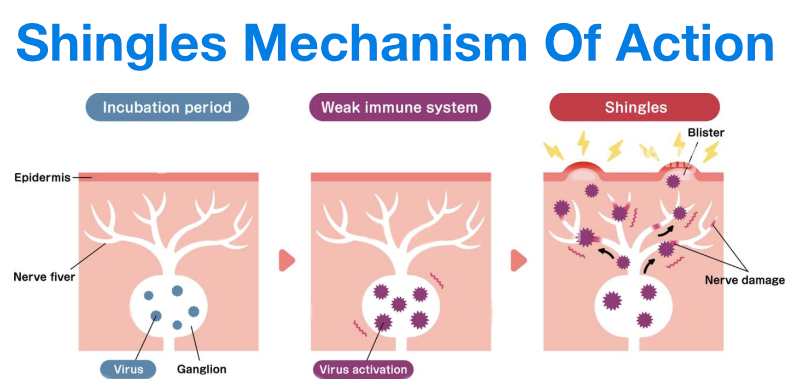
Shingles, or herpes zoster, is a painful viral infection caused by the reactivation of the varicella-zoster virus, the same virus that causes chickenpox. Once reactivated, the virus travels along nerve pathways to the skin, causing a characteristic rash and often severe pain.
Conventional treatment focuses on antiviral medications and pain relief. Functional Medicine and Traditional Chinese Medicine offer distinct yet complementary approaches that aim not only for symptom relief, but also for addressing the underlying terrain that allowed the viral reactivation to occur.
Shingles is not only a rash problem. It is often an immune, inflammatory, and stress-physiology story revealing itself through the skin and nerves.
The Functional Medicine Approach: Targeting Root Causes and Immune Resilience
Functional Medicine views shingles as a manifestation of a deeper systemic imbalance, most often a compromised immune system that allowed dormant varicella-zoster virus to reactivate. The approach is personalized and focuses on identifying and correcting the root drivers of immune dysfunction, inflammation, and stress.
Immune System Optimization
The core functional strategy is to strengthen the body's defenses against the virus, especially because reactivation is often linked to a weakened immune state.
- Nutritional support: a nutrient-dense, anti-inflammatory diet with attention to vitamins A, C, D, E, B-complex, zinc, and lysine.
- Gut health: healing the gut lining and improving microbial resilience with probiotics, prebiotic fiber, and L-glutamine when appropriate.
- Targeted testing: stool analysis or other functional workup may help identify digestive and immune imbalances.
Inflammation and Nerve Pain Management
Functional approaches also aim to reduce the systemic inflammation that drives nerve pain and post-herpetic discomfort.
- Anti-inflammatory diet: limiting refined carbohydrates, added sugars, processed foods, and identified food sensitivities.
- Targeted supplements: omega-3 fatty acids, curcumin, and B vitamins, especially B12, are often used to support nerve health and reduce inflammatory burden.
Stress and Adrenal Support
Chronic stress is a major trigger for viral reactivation due to the immune-suppressing effects of elevated cortisol. Lifestyle interventions such as high-quality sleep, meditation, yoga, or breathing practices become central.
Adrenal assessment, including cortisol testing when appropriate, may help guide adaptogenic support and lifestyle strategies for restoring a healthier stress response.
Functional Medicine Diet: Lysine vs. Arginine for Shingles
The varicella-zoster virus that causes shingles is thought to require the amino acid arginine for replication. Lysine may compete with arginine for absorption and utilization, thereby reducing the virus's ability to reproduce.
The practical goal during an active outbreak is to emphasize foods with a higher lysine-to-arginine ratio and limit those with a lower ratio.
Table 1. High-lysine foods to favor
| Category | Examples of high-lysine foods |
|---|---|
| Animal Proteins | Beef, chicken, turkey, lamb, and lean pork. |
| Dairy | Cheese, milk, and plain yogurt, especially Greek or Skyr styles for higher protein. |
| Fish and Seafood | Wild-caught fish such as cod, tuna, salmon, sardines, and haddock. |
| Eggs | Pasture-raised eggs. |
| Legumes | Selected beans, especially mung bean sprouts. |
| Fruits and Vegetables | Mangoes, dried apricots, beets, pears, and avocado. |
Table 2. High-arginine foods to limit during an outbreak
| Category | Examples of high-arginine foods to limit |
|---|---|
| Nuts and Seeds | Almonds, walnuts, peanuts, cashews, pecans, sesame seeds, sunflower seeds, and pumpkin seeds. |
| Chocolate | All forms of chocolate, especially dark chocolate and cocoa powder. |
| Grains | Whole wheat, oats, granola, whole grain cereals, gelatin, and coconut-containing grain products. |
| Other | Coconut and coconut milk, carob, and spirulina. |
General Anti-Inflammatory and Immune Support
Beyond lysine and arginine balance, the broader functional medicine goal is to reduce inflammatory load while maximizing nutrients essential for immune function and nerve repair.
Foods to Avoid
- Sugar and refined carbohydrates: high-glycemic foods increase inflammatory stress and metabolic volatility.
- Processed foods: foods high in trans fats, poor-quality fats, and excess omega-6 load can drive systemic inflammation.
- Alcohol: this can impair immune function and interfere with sleep and liver burden.
Table 3. Immune-supportive nutrients to maximize
| Nutrient | Source | Immune or nerve benefit |
|---|---|---|
| Vitamin C | Citrus fruits, bell peppers, broccoli, kale, and kiwi. | Enhances immune cell function and provides antioxidant support. |
| Zinc | Oysters, red meat, pumpkin seeds, and chickpeas. | Essential for T-cell function and antiviral resilience. |
| B Vitamins, especially B12 | Eggs, meat, fish, and cultured dairy. | Supports nerve repair and may help lower the risk of post-herpetic neuralgia. |
| Vitamin D | Fatty fish, egg yolks, fortified foods, and sunlight. | Acts as a powerful immune modulator. |
| Omega-3 Fats | Fatty fish, flaxseeds, and walnuts. | Helps reduce inflammatory signaling throughout the body. |
During shingles recovery, food is not a side issue. It becomes part of the antiviral, anti-inflammatory, and nerve-support strategy.
The Traditional Chinese Medicine Approach: Restoring Balance and Flow
TCM views shingles, or she chuang , as an external manifestation of deeper internal disharmony. Common patterns include excess Damp-Heat, Liver Fire, or a combination of toxicity and stagnation that later evolves into deficiency in more chronic cases.
Treatment aims to clear heat, drain dampness, resolve toxicity, and move Qi and Blood. In later stages, especially when post-herpetic neuralgia lingers, the emphasis often shifts toward nourishing and restoring.
Acupuncture and Moxibustion
- Acute pain relief: acupuncture can help clear heat, regulate inflammation, and reduce pain.
- Preventing PHN: early, consistent treatment may reduce the incidence or severity of post-herpetic neuralgia.
- Restoring flow: moving Qi and Blood along the affected channels helps address stagnation created by the viral insult.
Herbal Medicine
Customized herbal formulas are chosen according to the patient's pattern, such as Liver Fire or Damp-Heat. Some formulas focus on clearing heat and toxicity, while others are designed to address deficiency and nerve recovery after the acute phase has passed.
Topical and Adjunctive Therapies
Topical herbal washes or pastes may be used to dry blisters, calm itching, and support local healing. Other adjunctive techniques, such as cupping or moxibustion, may be used in selected cases but are avoided directly over acute lesions.
TCM Herbal Formulas for Shingles: Clearing Heat and Dampness
In TCM, the initial, severe phase of shingles is often understood as an excess pattern, most commonly Damp-Heat with Fire Toxicity. The therapeutic principle is to clear heat, resolve toxicity, and drain dampness while matching the formula to the person's constitution and presentation.
Table 4. Long Dan Xie Gan Tang
| Key herbs | Primary action | Shingles symptoms addressed |
|---|---|---|
| Long Dan Cao (Gentiana) | Drains Fire and clears Damp-Heat from the Liver and Gallbladder. | Intense burning pain, vivid redness, and rapid-onset heat patterns. |
| Huang Qin (Scutellaria) and Zhi Zi (Gardenia) | Clear heat and dry dampness. | Restlessness, irritability, and heat signs. |
| Ze Xie (Alisma) and Mu Tong (Akebia) | Drain dampness through urination. | Weeping blisters and toxic damp presentations. |
This formula is classically used for shingles with severe burning pain, bright red rash, fever, irritability, and lesions that may be blistered or weeping.
Table 5. Chai Hu Shu Gan San as a modification when stress is prominent
| Key herbs | Primary action | Shingles symptoms addressed |
|---|---|---|
| Chai Hu (Bupleurum) | Spreads Liver Qi and relieves constraint. | Stress-related triggers, emotional reactivity, and tension. |
| Chuan Xiong (Ligusticum) and Bai Shao (Peony) | Invigorate blood and regulate pain. | Sharp, fixed pain and Blood or Qi stagnation in the channels. |
| Zhi Ke (Citrus) | Promotes movement of Qi. | Distention, fullness, and stress-linked aggravation. |
This formula or a variation may be used when the outbreak clearly follows emotional stress or when tension and stagnation are strongly part of the presentation.
Table 6. Liang Xue Jie Du Tang
| Key herbs | Primary action | Shingles symptoms addressed |
|---|---|---|
| Jin Yin Hua (Honeysuckle) and Lian Qiao (Forsythia) | Clear heat and resolve toxicity. | Fever, inflamed lesions, and strong toxicity patterns. |
| Pu Gong Ying (Dandelion) | Clears heat and targets inflamed lesions. | Redness, swelling, and local inflammation. |
| Sheng Di Huang (Rehmannia) | Cools the Blood and nourishes Yin. | Scorched, depleted presentations and recovery support after intense Heat. |
This formula is often most useful during the active blistering phase, when toxicity needs to be cleared rapidly and recovery support must begin at the same time.
A Note on Post-Herpetic Neuralgia
Once the acute rash heals, shingles may evolve into post-herpetic neuralgia. TCM often sees this as a chronic pattern of Qi and Blood stagnation combined with underlying deficiency. At that stage, treatment shifts away from clearing excess heat and toward nourishing Blood, moving Qi, and improving circulation to help the nerves recover.
An Integrated Healing Model
A combined functional medicine and TCM approach gives shingles patients a wider map: immune resilience, viral support, inflammation control, and long-term nerve recovery can all be addressed together.
| Goal | Functional Medicine contribution | TCM contribution |
|---|---|---|
| Addressing root cause | Identify immune dysfunction, nutrient gaps, gut imbalance, and the lifestyle drivers of reactivation. | Diagnose and treat the deeper energetic pattern, such as Liver Fire or Damp-Heat. |
| Viral and immune support | Use lysine, zinc, vitamins, and broader immune support strategies. | Apply antiviral and immune-modulating herbal formulas suited to the patient's pattern. |
| Pain and inflammation | Use diet and supplements such as omega-3s and curcumin to reduce inflammatory signaling. | Use acupuncture to modulate pain, calm inflammation, and restore circulation through the affected channels. |
| Long-term recovery | Emphasize stress management, sleep, and B-vitamin or other nutritional support for nerve recovery. | Nourish Qi and Blood to help prevent post-herpetic neuralgia and restore vitality. |
By working on the illness from both the biochemical and energetic angles, patients may find more meaningful relief, better recovery from the rash itself, and a lower likelihood of sliding into prolonged nerve pain.