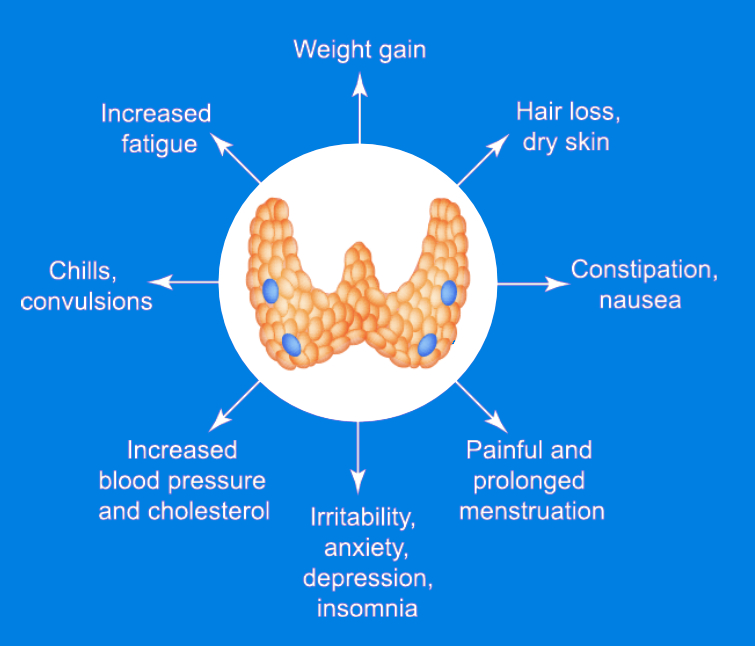
Thyroid issues are not just about TSH. They often show up through
fatigue, cold intolerance, poor sleep, constipation, weight
changes, mood shifts, menstrual changes, and a body that no longer
regulates itself smoothly.
Many people have the lived experience of feeling hypothyroid
long before anyone is willing to call it that. They feel colder,
slower, heavier, more constipated, more fatigued, and less
resilient. Yet routine testing can still be labeled “fine.”
The problem is not that lab work is useless. It is that thyroid
physiology is more complex than one number, and symptoms emerge
from the whole system rather than a lab range alone.
Why thyroid function affects so many systems
Thyroid hormones influence metabolism, body temperature, heart
rate, bowel motility, skin and hair turnover, menstrual
regularity, energy production, and mental clarity. When thyroid
signaling is reduced or distorted, the result can look like
burnout, depression, poor recovery, or sleep dysregulation.
fatigue and slow recovery
cold intolerance
constipation or slow digestion
depressed mood or brain fog
hair thinning and dry skin
weight loss resistance
sleep disturbance despite exhaustion
Why “normal” labs can still miss the picture
TSH is a useful starting point, but it is not the whole story.
Free T4, free T3, thyroid antibodies, and context can matter
just as much. Stress physiology, inflammation, iron status,
sleep deprivation, nutrient deficiency, and autoimmune activity
can all shape how thyroid symptoms are experienced.
In some people, the issue is less about outright gland failure
and more about conversion, signaling, transport, or the drag
created by broader systemic burden.
Thyroid patterns often show up through a cluster of signs
rather than one isolated complaint.
Sleep and thyroid are part of the same loop
Thyroid dysfunction can worsen insomnia, restlessness,
temperature discomfort, and fragmented sleep. But the loop goes
the other way too: chronic sleep deprivation can increase
cortisol burden and distort the hypothalamic-pituitary-thyroid
axis. This is one reason sleep medicine and thyroid assessment
should not be treated as separate worlds.
What a broader thyroid workup looks like
A functional review may include thyroid markers beyond TSH,
autoimmunity screening when appropriate, iron and ferritin,
micronutrient status, digestive considerations, inflammatory
patterns, medication burden, and sleep and stress analysis. The
goal is not endless testing. The goal is better interpretation.
Bottom line:
thyroid symptoms deserve to be read in context. The body does
not experience thyroid physiology as a lab report.