
Back to resources
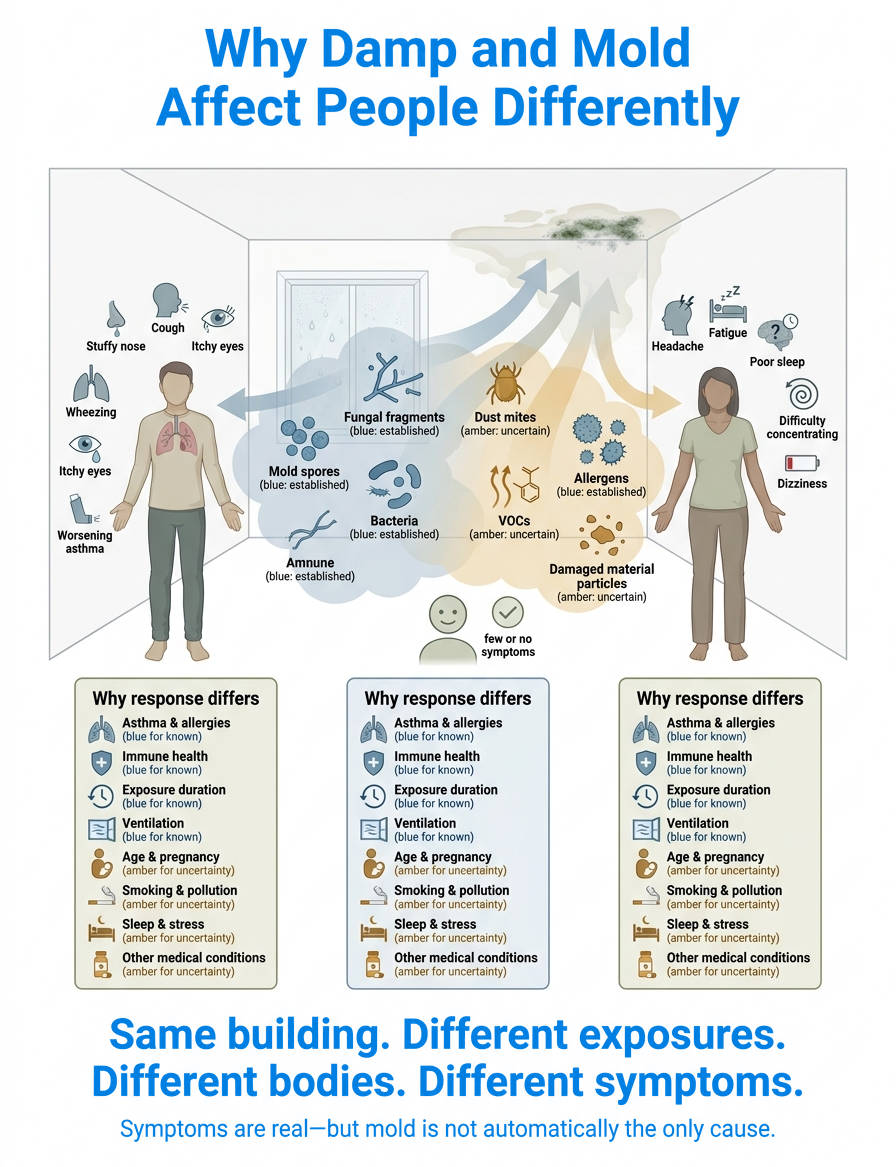
Why Damp and Mold Can Affect People Differently
Two people may spend time in the same damp or water-damaged building and experience very different effects.
Why Damp and Mold Can Affect People Differently
Two people may spend time in the same damp or water-damaged building and experience very different effects.
One person may develop nasal congestion, cough, wheezing, eye irritation, or headaches. Another may notice worsening asthma or recurrent sinus symptoms. Someone else may report fatigue, difficulty concentrating, dizziness, poor sleep, or other symptoms that are harder to attribute to a single cause symptoms that are real and deserve attention. Some people notice little or no effect. These differences are real, but they do not necessarily mean that every symptom is caused by mold through the same biological pathways.
Because we are all wired to look for single cause pathology / etiology it doesn’t work that way and it’s always a challenge to explain that nothing is as linear as we expect. Medicine is often the art of managing uncertainty. I try to look at the evidence while allowing for my clinical experience and patient intuition to be factored in. My approach is to separate what is established from what remains uncertain (but possible).
What Is Well Established
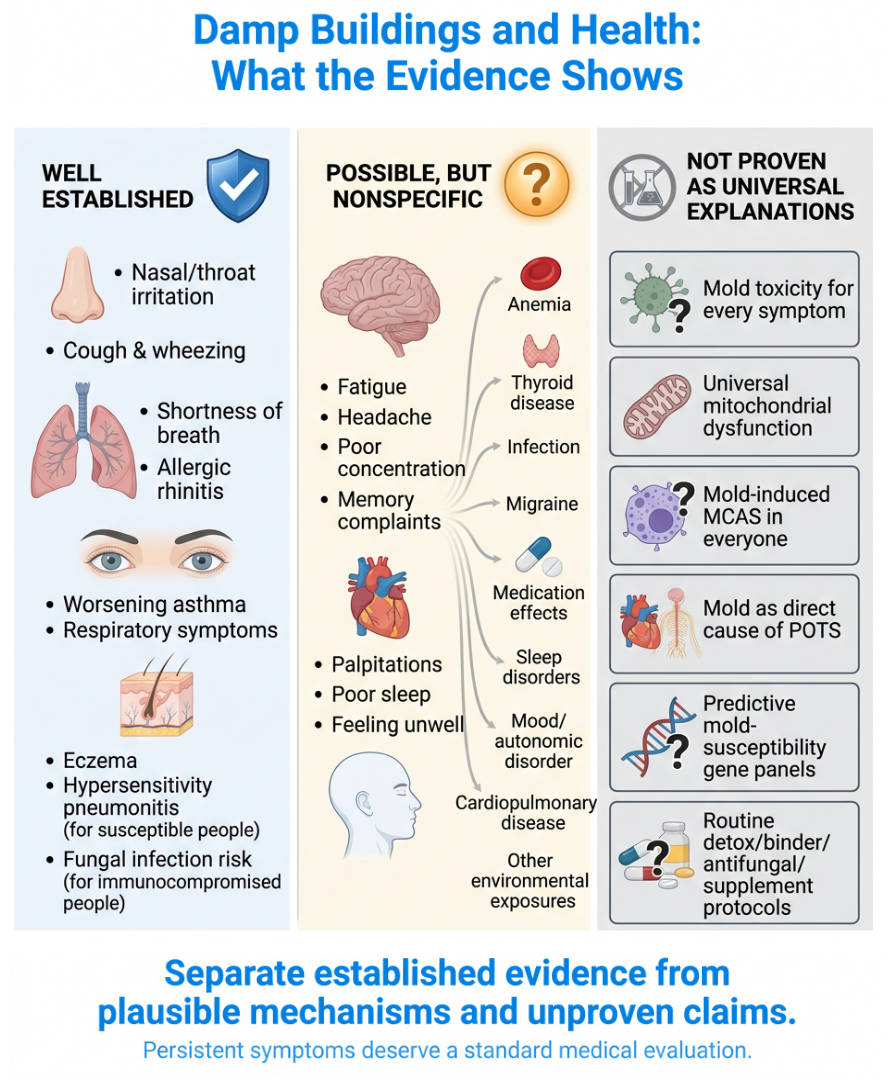
Living or working in a damp or mold-damaged area is associated with an increased risk of:
- Nasal and throat irritation
- Cough
- Wheezing
- Shortness of breath
- Worsening asthma
- New-onset asthma in some populations
- Allergic rhinitis
- Respiratory symptoms and, in some studies, increased risk of respiratory infections
- Eczema
- Hypersensitivity pneumonitis in susceptible individuals (an uncommon condition and not the typical response to household mold exposure)
People with asthma, mold allergy, chronic lung disease, or impaired immunity may be more vulnerable. Mold may also irritate the eyes, skin, nose, throat, and lungs in people who do not have a classic mold allergy. These effects are the most consistently supported findings in the medical literature. Let’s also remember that even if mold is one biological factor, the nature of the building, ventilation, humidity, furniture etc plays a huge role in exposure and it’s not 100% quantifiable. Which brings me to my next point:
Damp Buildings Contain More Than Mold
A water-damaged indoor environment may contain a mixture of:
- Mold spores
- Fungal fragments
- Bacteria
- Endotoxins and other microbial products
- Dust mites
- Allergens
- Volatile organic compounds (VOCs)
- Irritating emissions from damaged building materials
- Mycotoxins (produced by some fungi under certain conditions — although the presence of mold does not automatically mean harmful levels of mycotoxins are present)
This means that symptoms associated with a damp building cannot always be attributed to one organism or one toxin (the one cause thing is a bit of my broken record isn’t it!). The moisture problem itself is often the best practical indicator that remediation is needed. There is no universally accepted indoor mold level that reliably predicts whether a particular person will become ill. But…
People Respond Differently
Individual responses may vary because of differences in:
- Asthma or airway hyperreactivity
- Mold sensitization or other allergies
- Immune status
- Chronic respiratory disease
- Exposure intensity and duration
- Ventilation, geolocation and building conditions
- Smoking or other air-pollution exposure
- Age
- Pregnancy
- Medications
- Sleep quality
- Psychological and physiological stress (eg trauma)
- Other illnesses occurring at the same time including other toxicity including other environmental exposures.
Genetics may influence susceptibility to asthma, allergy, inflammation, or immune responses in general. But, there is currently no validated “mold susceptibility gene panel” that can predict who will become ill from mold exposure or determine individualized supplement needs.
Mold Respiratory and Allergic Symptoms
Mold exposure often involves the respiratory tract. Symptoms may include:
- Nasal congestion
- Sneezing
- Runny nose
- Itchy or watery eyes
- Sore throat
- Cough
- Wheezing
- Chest tightness
- Shortness of breath
In people with asthma, dampness and mold exposure can worsen symptoms and increase the need for treatment. A less common but more serious response is hypersensitivity pneumonitis, an immune-mediated lung disease that can cause cough, breathlessness, fever, fatigue, and abnormalities on lung imaging. In cases where this type of inflammation persists and exposure continues, it may, in some individuals, lead to lasting changes in the lungs in a small subset of individuals, lead to lasting changes in the lungs, including fibrosis (scarring). Immunocompromised persons may also be at increased risk of fungal infections, although invasive fungal infection is not the typical outcome of household mold exposure in otherwise healthy people (in my experience and checked with existing literature, see references below - correct me if necessary).
Fatigue, Headache, and Cognitive Symptoms
Some people in damp buildings report:
- Fatigue
- Headache
- Difficulty concentrating
- Memory complaints
- Poor sleep
- A general sense of feeling unwell
These symptoms should not be dismissed, but they are nonspecific and I connect them in a matrix in the context of systems medicine. Because….
They can also occur with:
- Sleep disorders
- Anemia
- Thyroid disease
- Infection
- Medication effects
- Migraine
- Mood disorders
- Autonomic disorders
- Nutritional deficiency
- Cardiopulmonary disease
- Hormonal changes
- Chronic stress
- Other environmental exposures
Current evidence does not support diagnosing a specific neurological or mitochondrial dysfunction directly in connection with mold tox.
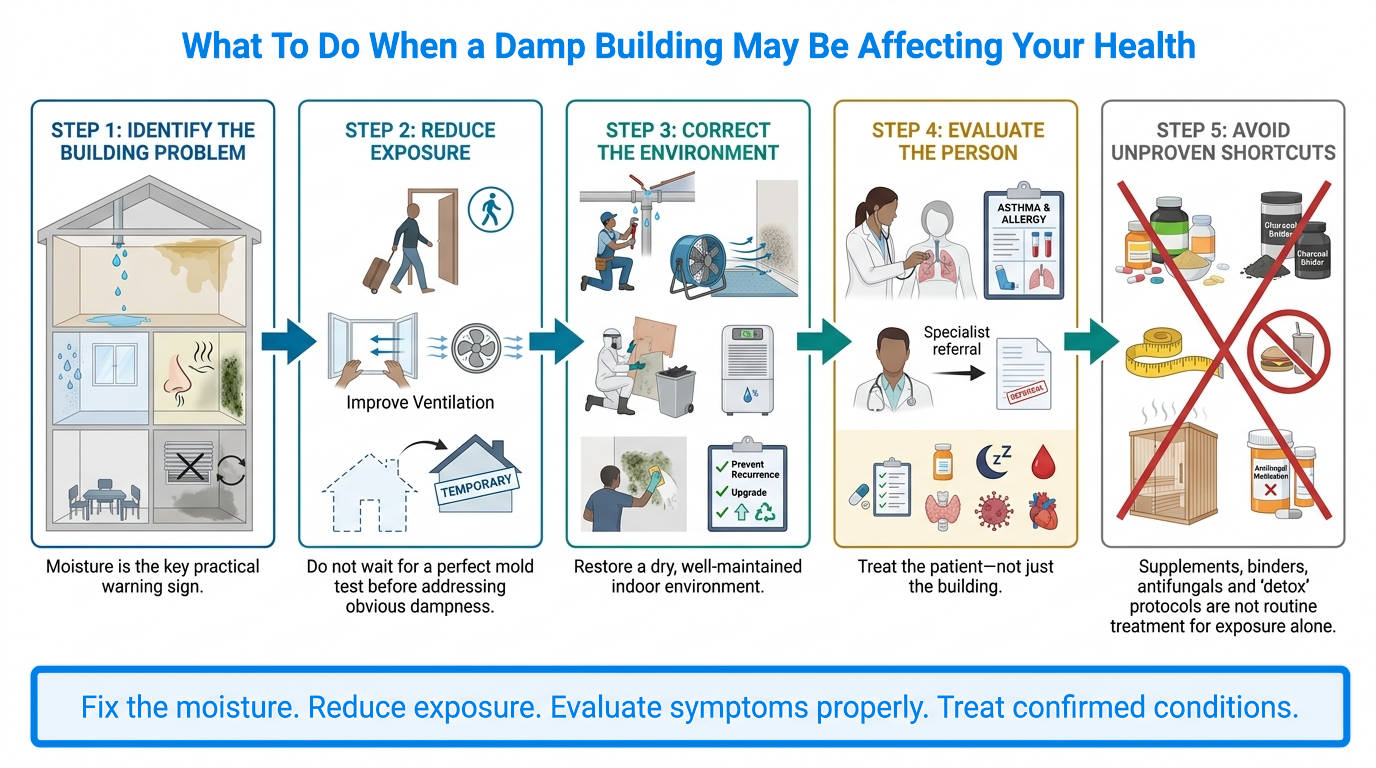
When symptoms are persistent or severe, the appropriate response is a standard medical evaluation rather than assuming that mold is the only explanation. Yes, my approach as my patients can testify.
Mast Cells and Histamine
Mast cells and histamine are involved in allergic and inflammatory responses. Mold allergens can trigger IgE-mediated allergy in sensitized individuals, and components of damp indoor environments may contribute to irritation or inflammatory signaling. But exposure to mold does not automatically mean that a person has mast cell activation syndrome. MCAS is a specific clinical diagnosis (which I have encountered many times indenpendent of mold) It shows:
- Recurrent, systemic symptoms involving more than one organ system
- Objective evidence of mast-cell mediator release
- Improvement with mast-cell-directed treatment
- Exclusion of alternative diagnoses
Flushing, itching, tachycardia, nausea, dizziness, headache, or food reactions may occur in mast-cell disorders, but these symptoms are not specific enough to establish MCAS or mold causation by themselves. Am I driving your crazy by now? Not the goal but it’s my job to establish evidence and also compassion and include your intuition in the process. You are the most important observer of your own health.
More: Autonomic Symptoms
Dizziness, palpitations, heart-rate changes, and orthostatic symptoms may occur for many reasons.
Mold causes and other causes include:
- Dehydration
- Low blood pressure
- Medication effects
- Anemia
- Cardiac arrhythmia
- Endocrine disease
- POTS or another autonomic disorder
- Anxiety or panic symptoms
- Infection
- Poor sleep
Current evidence does not establish damp-building exposure as a common direct cause of POTS or dysautonomia but in a functional medicine framework I count it as a mediator (something that makes things better or worse)
These symptoms deserve conventional cardiovascular, neurological, and autonomic evaluation when clinically indicated (as my patients know I refer all the time to board certified cardio, neuro, derm, GI etc.)
For Mycotoxins and Oxidative Stress, Genetics
I was going to sound interesting here and show off but I think I’ll leave that to a case by case basis… the presence of mold does not automatically mean harmful levels of mycotoxins are present. Yes. While genetics clearly influence how individuals respond to environmental exposures, there is currently no validated genetic test that can predict who will become ill from mold exposure.
Nutrients, Supplements, Binders, Antifungals, and Detox Protocols
A common temptation is to jump quickly into large supplement protocols…. Nutrients such as vitamin C, magnesium, riboflavin, niacinamide, selenium, zinc, glycine, phosphatidylcholine, EPA, and DHA have normal physiological roles. Those roles include:
- Energy metabolism
- Antioxidant defense
- Membrane structure
- Immune function
- Neurotransmission
- Enzyme activity
- Tissue repair
That does not mean they are specific treatments for mold exposure. There is insufficient clinical evidence to support routine mold protocols based on:
- Glutathione
- NAC
- Phosphatidylcholine
- Molybdenum
- High-dose antioxidants
- “Mitochondrial support”
- “Membrane repair”
- Gene-directed nutrient combinations
I know I’m ruining the influencer business but while supplementation may be appropriate when there is a documented deficiency, a conventional medical indication, or a carefully considered therapeutic goal. It should not replace evaluation for asthma, hypersensitivity pneumonitis, infection, anemia, thyroid disease, sleep disorders, cardiovascular disease, medication effects, or other causes of persistent symptoms. Also…
Activated charcoal and other binders are sometimes promoted for mold-related symptoms. Evidence supporting their routine use for indoor mold exposure is limited. Binders may:
- Reduce absorption of prescription medications
- Interfere with nutrient absorption
- Cause constipation
- Worsen dehydration
- Create additional risk in people with gastrointestinal disease
Antifungal medications are not standard treatment for simply having been exposed to mold. They are used when there is a diagnosed fungal infection or another specific fungal disease. Sauna therapy, fasting, restrictive diets, multiple supplements, and aggressive “detoxification” programs have not been established as standard treatment for damp-building exposure and may worsen symptoms in vulnerable individuals. Just avoid advice from people who have no credentials or medical license.
Finally, Environmental Correction Comes First
- Repairing leaks
- Correcting water intrusion
- Drying wet materials
- Removing irreparably damaged materials
- Improving ventilation
- Controlling condensation
- Remediating visible mold
- Preventing recurrence
Testing the building for specific mold species is often less useful than identifying visible dampness, mold odor, water damage, and moisture sources. The practical goal is not to identify a single “toxic mold.” It is to restore a dry, well-maintained indoor environment. OR just move out to a damp/mold free place. Refer to your local law for remediation.
Conclusion
You made it that far. Here is the summary of what I stand behind as a evidence based practitioner:
Damp and mold-damaged buildings can adversely affect health. The strongest evidence involves:
- Respiratory irritation
- Allergy
- Asthma
- Rhinitis
- Respiratory infection
- Symptoms such as headache, fatigue, and difficulty concentrating
- Chronic fatigue
- Hypersensitivity pneumonitis
- Fungal infection in susceptible patients
Other multisystem complaints may occur, but they are nonspecific and require a broader differential diagnosis. Oxidative stress, mitochondrial dysfunction, mast-cell activation, autonomic dysfunction, altered histamine metabolism, and genetic susceptibility are areas of ongoing research. I can’t look at them as proven universal explanations or used to justify broad supplement and detoxification protocols. Again everyone is unique and I treat all of you that way.
References
- Mendell MJ, et al. Dampness and mould: health effects, exposure assessment and prevention. NCBI Bookshelf. Available at: https://www.ncbi.nlm.nih.gov/books/NBK143940/
- Centers for Disease Control and Prevention. Health Problems Associated with Damp Buildings and Mold. National Institute for Occupational Safety and Health; February 2025. Available at: https://www.cdc.gov/niosh/mold/health-problems/index.html
- Sharpe RA, et al. Journal of Allergy and Clinical Immunology. 2014. doi: 10.1016/j.jaci.2014.07.002
- Jaakkola MS, et al. Journal of Allergy and Clinical Immunology. 2013. doi: 10.1016/j.jaci.2013.07.028
- NCBI Bookshelf. Available at: https://www.ncbi.nlm.nih.gov/books/NBK143943/
- Douwes J. NCBI Bookshelf. Available at: https://www.ncbi.nlm.nih.gov/books/NBK143945/
- NCBI Bookshelf. Available at: https://www.ncbi.nlm.nih.gov/books/NBK143942/
- NCBI Bookshelf. Available at: https://www.ncbi.nlm.nih.gov/books/NBK535301/
- Centers for Disease Control and Prevention. About Mold and Health. September 2024. Available at: https://www.cdc.gov/mold-health/about/index.html
- Weiler CR, et al. Journal of Allergy and Clinical Immunology. 2019. doi: 10.1016/j.jaci.2019.08.023
- Castells M, et al. Journal of Allergy and Clinical Immunology. 2024. doi: 10.1016/j.jaci.2024.05.025
- Akın C, et al. The Journal of Allergy and Clinical Immunology: In Practice. 2025. doi: 10.1016/j.jaip.2025.10.046