
Branched Chain Amino Acids (BCAAs): A Clinical and Performance Perspective
In the world of sports nutrition, Branched-Chain Amino Acids (BCAAs)—leucine, isoleucine, and valine—are often relegated to the realm of “bodybuilding supplements.” However, from a functional medicine perspective, these essential nutrients play a much more nuanced role than simply triggering muscle protein synthesis. They are powerful metabolic signals that influence mitochondrial health, neurotransmitter balance, and systemic recovery.
The Functional Role of BCAAs
Unlike most amino acids that are metabolized in the liver, BCAAs are primarily oxidized in skeletal muscle. This makes them a rapid energy source during periods of high metabolic demand.
Mitigating Central Fatigue: The Tryptophan Competition
One of the most compelling reasons to use BCAAs during long-distance efforts is their effect on the brain. During prolonged exercise, the body’s levels of “Free Tryptophan” increase. This tryptophan crosses the blood-brain barrier, where it is converted into serotonin—the neurotransmitter associated with relaxation and, eventually, lethargy and “central fatigue.”
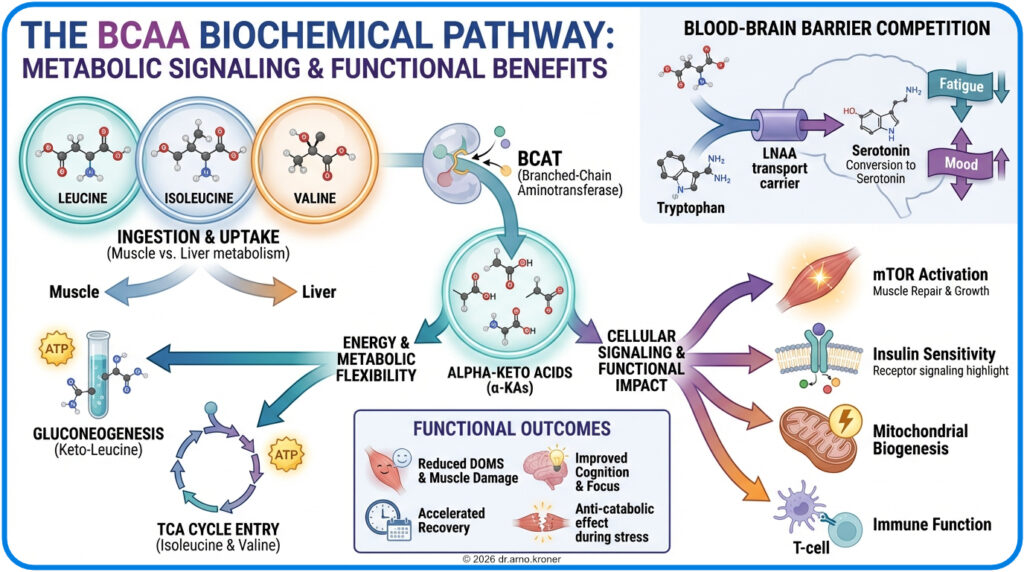
BCAAs compete for the Large Neutral Amino Acid (LNAA) transport carrier, the same “gateway” tryptophan uses to enter the brain. By maintaining high plasma BCAA levels, we effectively crowd out the tryptophan, delaying the onset of mental fatigue and maintaining the psychological drive necessary for high-level performance.
Attenuating DOMS (Delayed Onset Muscle Soreness)
From a clinical standpoint, one of the most practical benefits of BCAA supplementation is the reduction of DOMS. BCAAs—leucine in particular—suppress muscle protein breakdown and reduce the efflux of intramuscular enzymes (like creatine kinase) into the blood.
By blunting the structural damage to myofibrils during eccentric loading (like downhill running), BCAAs allow for a faster return to training. In functional medicine, we view this not just as “less pain,” but as a more efficient resolution of the systemic inflammatory response.
BOOK A FREE DISCOVERY CALL
Insights from the Trail: My Experience as an Ultra-Runner
Theoretical biochemistry is one thing, but the true test of any intervention is the clinical and “field” application. Having competed in grueling events like the Boston Marathon and the Ultra-Trail du Mont-Blanc (UTMB), I have seen firsthand how BCAAs function under extreme physiological duress. You can browse the Endurance blog to find BCAAs featured quite a bit in race reports of general advice.
When you are 15 hours into a mountain race, your body is in a state of profound catabolism. In my experience, the strategic use of BCAAs during these events was a game-changer for metabolic preservation.
By utilizing the “tryptophan-blocking” mechanism, I found I could stave off the intense brain fog that often leads to navigational errors or technical falls on technical descents. Furthermore, the reduction in DOMS meant that instead of being immobile for a week post-UTMB, I was able to begin active recovery much sooner, keeping my inflammatory markers within manageable parameters.
A Balanced Clinical Approach
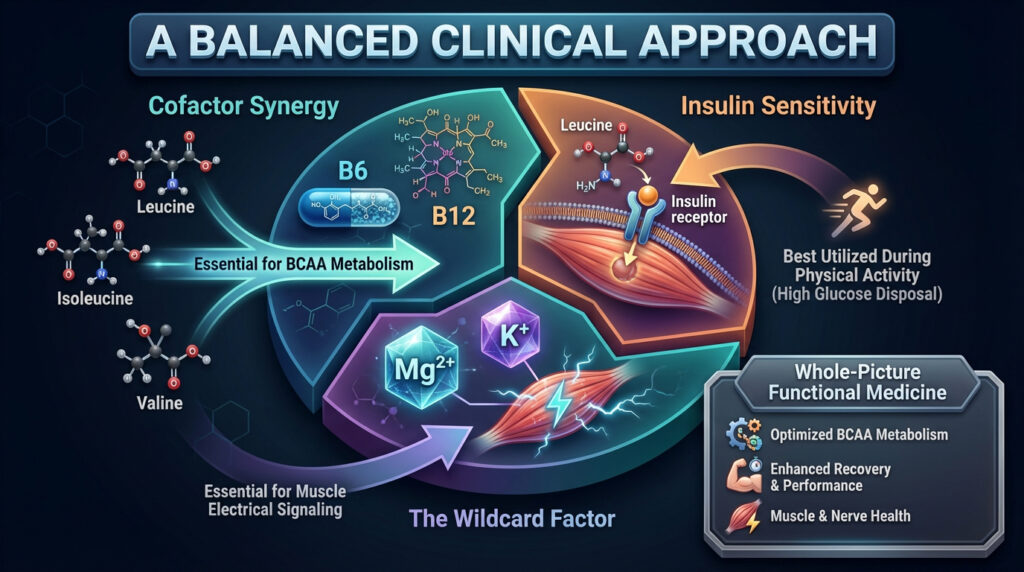
While BCAAs are a powerful tool, a functional medicine approach requires us to look at the whole picture:
- Cofactor Synergy: BCAAs require adequate B-vitamins (specifically B6 and B12) to be properly metabolized.
- Insulin Sensitivity: Because leucine can trigger an insulin response, it is best utilized in the context of physical activity where glucose disposal is high.
- The Wildcard Factor: Don’t forget the importance of electrolytes. While BCAAs handle the structural and signaling aspects of recovery, minerals like magnesium and potassium are essential for the electrical signaling of the muscle itself.
Summary
Whether you are a high-level athlete or someone looking to optimize your metabolic health, BCAAs offer a fascinating intersection of ancient physiology and modern biochemistry. By understanding their role as signaling molecules—protecting both the brain and the muscle—we can better support the body’s innate ability to perform, recover, and thrive.