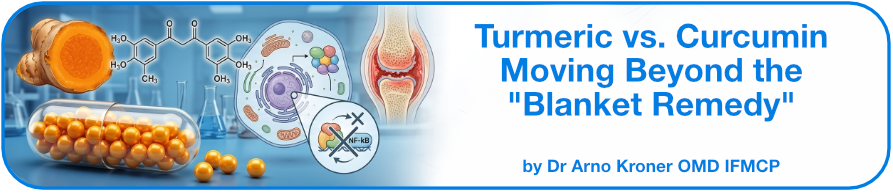
Turmeric vs. Curcumin: Moving Beyond the “Blanket Remedy”
In my clinical practice, I frequently encounter patients who have proactively added turmeric or curcumin to their daily regimen. It is encouraging to see such a widespread interest in natural anti-inflammatories; however, there is often a gap between simply “taking a supplement” and utilizing these botanical tools with clinical precision. While they are often used interchangeably in casual conversation, understanding the distinction between the whole rhizome and its isolated constituents is essential for achieving specific therapeutic outcomes.
The Whole and the Part: Definitions
To use these tools effectively, we must first distinguish the source from the extract:
- Turmeric (Curcuma longa): The whole root (rhizome). It contains over 200 molecular compounds, including volatile oils, polysaccharides, and fiber. Turmeric powder typically contains only 2–5% curcuminoids by weight.
- Curcumin: The primary curcuminoid found in turmeric. It is the most heavily researched “active ingredient” responsible for many of the plant’s bright yellow pigment and its systemic pharmacological effects.
BOOK A FREE DISCOVERY CALL
The Biochemical Pathway: Addressing Inflammation
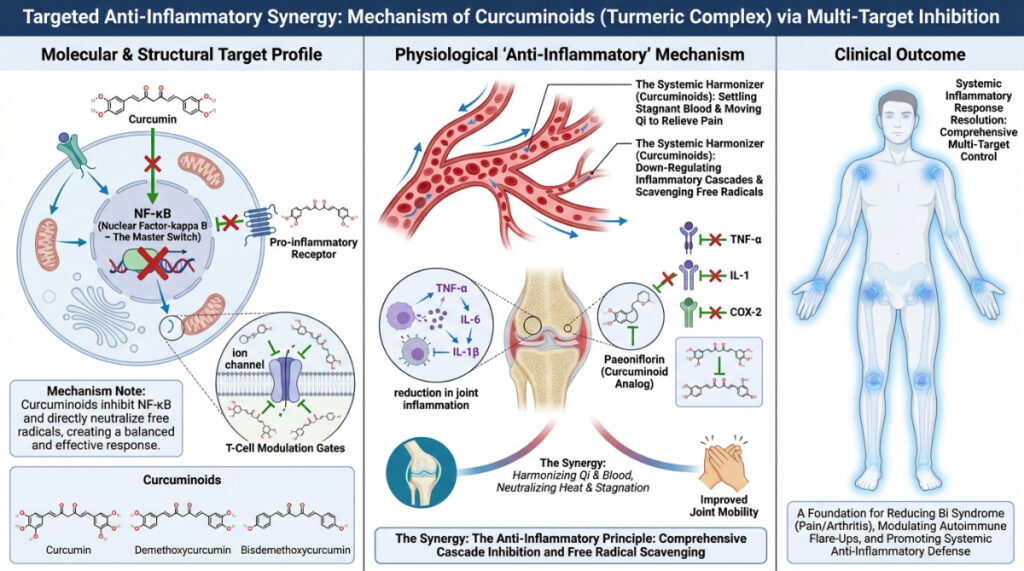
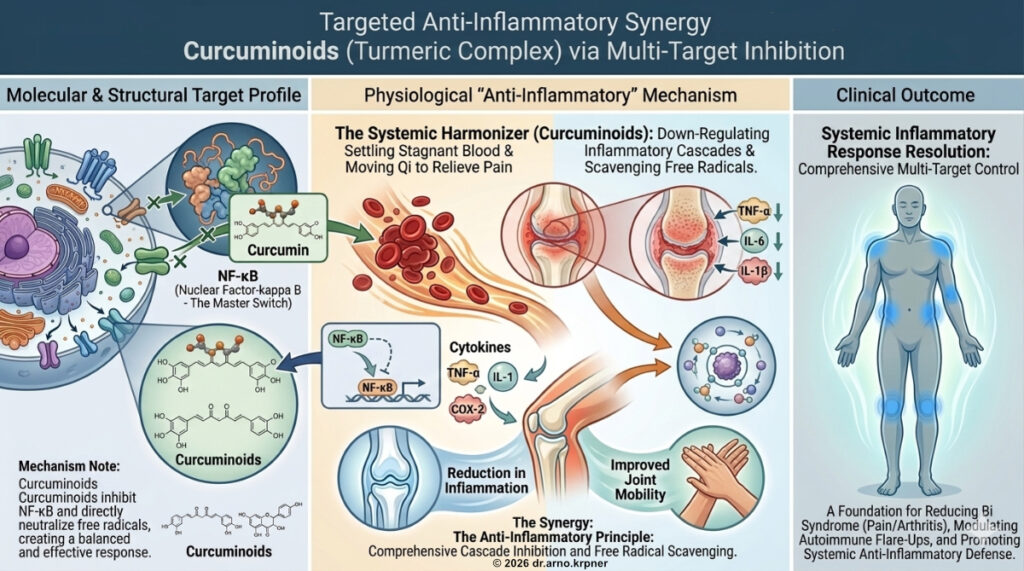
The primary mechanism involves the inhibition of Nuclear Factor-kappa B (NF-kappa B). This protein complex acts as a “master switch” for inflammation. When NF-kappa B is activated, it enters the cell nucleus and turns on genes that produce inflammatory cytokines.
From a modern physiological perspective, curcumin acts as a multi-target molecule. Unlike synthetic NSAIDs (Non-Steroidal Anti-Inflammatory Drugs) which primarily inhibit the COX-2 enzyme, curcumin modulates the inflammatory response “upstream.”
By suppressing NF-kappa, curcumin subsequently reduces the expression of:
- Cyclooxygenase-2 (COX-2 – what NSAIDs target) and 5-Lipooxygenase (5-LOX)
- Tumor Necrosis Factor-alpha (TNF-⍺)
- Interleukins (IL-1, IL-6, IL-8)
Integrative Perspectives: TCM and Functional Medicine
Functional Medicine
In functional medicine, we look at curcumin as a tool for metabolic detoxification and oxidative stress.
- Phase II Detoxification: Curcumin induces Nrf2, a cellular pathway that increases the production of endogenous antioxidants like glutathione.
- Intestinal Permeability: It is often used to support the gut barrier and modulate the gut microbiota, which is a foundational pillar of systemic immune health.
Traditional Chinese Medicine (TCM)
In the Materia Medica, we distinguish between Jiang Huang (Turmeric rhizome) and Yu Jin (Tuber). Turmeric is characterized as acrid, bitter, and warm.
- Blood Invigoration: It is primarily used to break up Blood Stasis, particularly in the shoulders and joints.
- Qi Movement: It moves stagnant Qi to alleviate pain.
- The Warmth Factor: Because it is warm, it is ideal for “Cold” patterns of Bi Syndrome (pain), but must be used cautiously in patients with “Heat” or Yin deficiency.
The Importance of Extract Concentration and Bioavailability
One of the most common mistakes in self-supplementation is ignoring pharmacokinetics. Raw turmeric powder has notoriously low bioavailability; the curcumin is rapidly metabolized and excreted by the liver before it can reach systemic circulation.
To move from a “blanket remedy” to a clinical intervention, we look for specific formulations:
- Concentration: Therapeutic extracts are usually standardized to 95% curcuminoids.
- Adjuvants: The addition of piperine (from black pepper) can increase curcumin absorption by up to 2,000% by inhibiting the metabolic pathway that clears it.
- Liposomal or Phytosome delivery: Binding curcumin to lipids (fats) allows it to bypass certain digestive hurdles, making it significantly more effective for systemic issues like neuroinflammation or cardiovascular support.

Clinical Safety: When “Natural” Requires Caution
As powerful as these extracts are, they are not inert. Because curcumin acts as a mild blood “harmonizer” (anticoagulant), I advise patients to consult their care team if they are taking:
- Blood thinners (Warfarin, Clopidogrel, or DOACs) due to increased bleeding risk.
- Diabetes medication, as curcumin can further lower blood glucose.
- Scheduled for surgery: Discontinue use 14 days prior to any procedure.
Furthermore, while it supports digestion, its cholagogue effect (bile stimulation) means it should be avoided by those with active gallstones.
Conclusion
Turmeric is a magnificent whole food for general wellness and culinary support, but when we are targeting chronic inflammatory pathways or specific “Blood Stasis” patterns, the dosage, concentration, and delivery method are what determine success. If you are using these tools, ensure they are matched to your specific biological “architecture” rather than used as a generic supplement.
BOOK A FREE DISCOVERY CALL