
The Lung-Gut Axis: An Integrated Perspective from Functional and Chinese Medicine
The emerging concept of the Lung-Gut Axis (LGA) is revolutionizing our understanding of respiratory and systemic health. This bidirectional communication pathway highlights a deep connection between the gastrointestinal and respiratory systems, primarily mediated by the microbiota and the immune system. Both Functional Medicine and Traditional Chinese Medicine (TCM) offer unique, yet harmonious, frameworks for understanding and influencing this critical axis.
Functional Medicine: The Microbiome and Systemic Immunity
Functional Medicine views the LGA through the lens of modern science, focusing on the biochemical and immunological crosstalk between the gut and the lungs.
Key Mechanisms
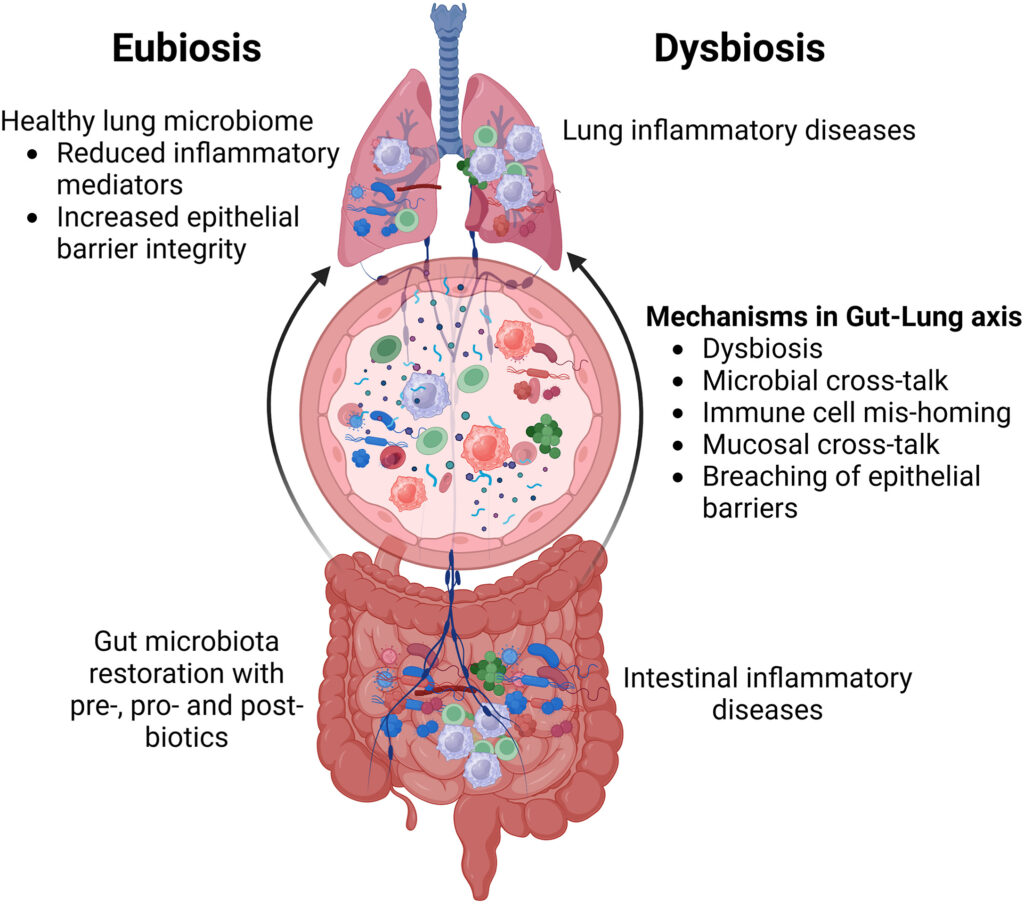
- The Microbiome: The gut houses the largest and most diverse community of microbes in the body. Alterations in its composition (dysbiosis) can profoundly affect distant organs, including the lungs.
- Lung Microbiome: While the lungs were once considered sterile, they possess a distinct, albeit less diverse, microbiome that is influenced by both the upper respiratory tract and the gut.
- Microbial Metabolites: A critical communication pathway involves metabolites produced by the gut microbiota, most notably Short-Chain Fatty Acids (SCFAs) like butyrate, propionate, and acetate.
- Role of SCFAs: Absorbed into the bloodstream, SCFAs travel to the lungs where they modulate immune cell function (e.g., T-cells, macrophages), regulate inflammatory responses, and enhance the integrity of the mucosal barrier. For instance, a healthy SCFA profile is associated with reduced pulmonary inflammation in conditions like asthma and COPD.
- Barrier Integrity and Immune Modulation: The integrity of the intestinal barrier (“Leaky Gut”) is paramount. When compromised, components like lipopolysaccharides (LPS) can translocate into the circulation, driving systemic inflammation that impacts the lungs. Both the gut and lungs are part of the Common Mucosal Immune System, allowing immune cells and signals (like secretory IgA) to migrate between the two sites, coordinating a unified defense.
Functional Medicine Interventions
Functional approaches focus on restoring gut homeostasis to optimize lung health:
- Dietary Intervention: A high-fiber, diverse, whole-foods diet (rich in fermentable fibers and polyphenols) to promote SCFA production and beneficial microbial diversity.
- Targeted Supplementation:
- Probiotics/Prebiotics: Introducing beneficial bacteria (probiotics) and the fibers that feed them (prebiotics) to correct dysbiosis.
- Postbiotics: Using microbial metabolites like butyrate directly.
- Nutrients for Barrier Repair: Utilizing compounds like L-Glutamine, Zinc, and Vitamin D to support the integrity of the intestinal lining.
Traditional Chinese Medicine (TCM): Organ Interconnection
TCM has recognized the functional relationship between the Lungs and the digestive system for millennia, well before the term “Lung-Gut Axis” was coined. This connection is understood through the intricate network of Zang-Fu organ relationships.
Key Relationships in TCM
- The Lung and Large Intestine (Exterior-Interior Relationship):
-
- In TCM, the Lung (Zang Organ) is paired with the Large Intestine (Fu Organ) in an Interior-Exterior relationship. This means they are directly interconnected and mutually influence each other.
- Physiology: The Lung’s function of descending Qi (vital energy) and diffusing fluids supports the Large Intestine’s function of moving the stool and excreting waste. Conversely, healthy elimination in the Large Intestine assists the Lung in its descending and diffusing action, ensuring smooth respiration.
- Pathology: A failure of Lung Qi to descend (e.g., coughing, asthma) can lead to constipation. Similarly, chronic constipation or intestinal stasis (dampness/heat in the Large Intestine) can impede the Lung’s function, causing shortness of breath or cough.
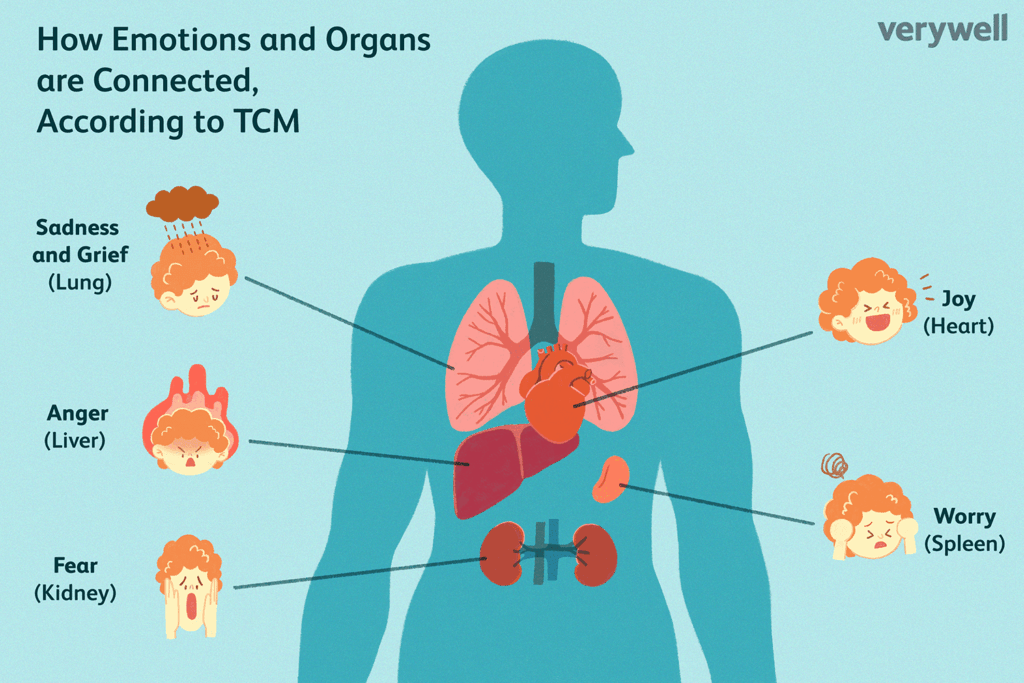
- Psychology: in TCM the emotion of the Lung is sadness and grief. We often see individuals who have experienced a traumatizing event become constipated. Similarly people who can’t “let go” (of a past event for example) are also often not releasing stool at the normal rate.
- The Spleen and the Lung (Mother-Child Relationship):
-
- 5 Elements: According to the Five Element theory, the Spleen (Earth element) is the “mother” of the Lung (Metal element), meaning the Spleen generates and nourishes the Lung. The Spleen governs transformation and transportation, extracting essential Qi and fluids from food and sending them upward to nourish the Lung.
- Pathology: Spleen Qi deficiency, often caused by poor diet or chronic stress, leads to impaired metabolism, creating Dampness and Phlegm. This Phlegm, when transported up, obstructs the Lung, resulting in chronic respiratory issues like chronic cough, asthma, or excessive mucus production.
TCM Interventions
TCM strategies for the LGA primarily focus on harmonizing the Spleen/Stomach and Large Intestine to support the Lung:
- Regulating Digestion: The primary focus is often on strengthening the Spleen Qi and resolving Dampness/Phlegm using formulas like Liu Jun Zi Tang (Six Gentlemen Decoction).
- Harmonizing Exterior-Interior: Prescriptions that simultaneously address the Large Intestine and Lung are common, such as using herbs that drain heat and relax the bowels to facilitate the descent of Lung Qi.
- Acupuncture: Acupuncture points on the Spleen, Stomach, and Large Intestine channels are utilized to directly regulate the digestive function, thereby indirectly clearing Lung pathology.
An Integrated Approach
The perspectives of Functional Medicine and TCM beautifully align on the fundamental principle that Lung health begins in the Gut.
| Component |
Functional Medicine Perspective |
Traditional Chinese Medicine Perspective |
| Gut Health | Intestinal Barrier Integrity & Microbial Diversity | Function of the Spleen (Transformation/Transportation) |
| Metabolites | Short-Chain Fatty Acids (SCFAs) | Refined food essences (Gu Qi) & Absence of Dampness/Phlegm |
| Pathology | Dysbiosis, Leaky Gut, Systemic Inflammation | Spleen/Stomach Disharmony, Phlegm Accumulation, Lung Qi Deficiency |
| Therapy Goal |
Restore eubiosis, increase SCFAs, heal mucosal lining |
Tonify Spleen Qi, resolve Dampness/Phlegm, harmonize Lung/Large Intestine |
By integrating these viewpoints, we can offer a truly holistic approach: using functional diagnostics (e.g., stool testing, SCFA analysis) to identify specific imbalances, while employing both TCM herbal formulas and modern dietary/supplement strategies to restore the delicate balance of the Lung-Gut Axis. This integration offers a powerful path toward treating chronic respiratory conditions from their systemic, metabolic, and energetic roots.
As an example, when I certified for the Institute of Functional Medicine I had to write a case study and it involved both chronic sinusitis and diarrhea, due to mold exposure. I treated the patient with a combination of TCM custom formulas and a functional medicine approach and testing to identify root causes.
The Lung-Gut Axis (LGA) is a bidirectional communication highway linking the respiratory and gastrointestinal tracts. While modern science is just beginning to map the biochemical signaling of this axis, Traditional Chinese Medicine (TCM) has successfully treated it for thousands of years through the concept of the Lung-Large Intestine relationship.
How does this apply specifically to conditions such as Asthma and Chronic Sinusitis?
Asthma: The “Root” is in the Gut
Asthma is often viewed as a localized lung problem, but both functional and Chinese medicine see it as a systemic issue where the “root” pathology often lies in digestion and elimination.
Functional Medicine View: The “Atopic March”
Research shows that early-life gut dysbiosis (imbalance of bacteria) is a primary driver of asthma.
- Mechanism: A healthy gut produces Short-Chain Fatty Acids (SCFAs) like butyrate, which calm the immune system.4 When gut bacteria are missing (due to antibiotics, C-section, or poor diet), the immune system shifts toward a Th2-dominant state. This state is “trigger-happy,” reacting aggressively to harmless environmental particles (pollen, dust) by causing airway constriction.
- The “Leaky Gut” Connection: Increased intestinal permeability allows food proteins and bacterial toxins (LPS) to enter the bloodstream, creating systemic inflammation that sensitizes the lung tissue.
TCM View: Phlegm & Kidney Deficiency
TCM famously states: “The Spleen is the producer of Phlegm; the Lungs are the container of Phlegm.”
- Spleen Deficiency (The Root): If your digestion (Spleen) is weak, it cannot effectively transform food into energy. Instead, it creates dampness and Phlegm. This phlegm is stored in the Lungs, obstructing the airways.5
- Kidney Deficiency (The Anchor): The Kidneys are responsible for “grasping” the Qi (breath) sent down by the Lungs. In chronic asthma, the Kidneys are too weak to grasp the breath, leading to difficulty inhaling.
Integrative Protocol for Asthma
- Primary Strategy: Clear the airways (Branch) while strengthening the gut and kidneys (Root).
| Intervention |
Functional Medicine Focus |
TCM Focus |
| Diet |
Elimination Diet: Remove dairy, gluten, and sugar (the top 3 inflammatory triggers). Increase Omega-3s to reduce bronchial inflammation. |
Avoid “Cold/Damp” Foods: No ice water, raw salads, or dairy. Eat warm, cooked stews to support Spleen Yang. |
| Supplements / Herbs |
Probiotics: Specifically Lactobacillus rhamnosus and Bifidobacterium to retrain the immune system. Vitamin D: Crucial for lung immune regulation. |
Yu Ping Feng San (Jade Windscreen Powder): Strengthens the “Wei Qi” (immune defense) to prevent attacks. Ding Chuan Tang: For acute wheezing/phlegm. |
| Therapy | Buteyko Breathing: Retrains CO2 tolerance to dilate airways naturally. | Acupuncture: Points on the Lung and Kidney meridians (e.g., LU7, KD3) to restore the “descending” function of breath. |
Chronic Sinusitis: The “Leaky Sinus”
Chronic sinusitis is rarely just an infection; it is often a biofilm issue and a reflection of the gut environment.
Functional Medicine View: Biofilms & Fungi
- Fungal Focus: Mayo Clinic research suggests that a significant percentage of chronic sinus infections are actually fungal in nature (reacting to mold in the air), not just bacterial.
- Biofilms: Chronic bacteria in the sinuses form “biofilms”—protective slime layers that make them resistant to antibiotics.
- The “Leaky Sinus”: Just as we have “Leaky Gut,” we can have “Leaky Sinus.” The mucous membranes of the gut and sinuses are continuous. If the gut is inflamed, the sinus membranes will also be inflamed and permeable.
TCM View: Damp-Heat & Wind
Sinusitis is often seen as Wind-Heat attacking the Lungs, or Damp-Heat lingering in the Gallbladder/Stomach channels (which travel to the face). Mechanism: When the Spleen fails to transport fluids, they accumulate and transform into Heat (infection/inflammation). This “Damp-Heat” rises to the head, blocking the orifices (sinuses), causing thick yellow discharge and frontal headaches.
Integrative Protocol for Chronic Sinusitis
- Primary Strategy: Break up the biofilm/phlegm and restore the mucosal barrier.
| Intervention | Functional Medicine Focus | TCM Focus |
| Diet |
Low-Histamine or Low-Mold Diet: Reduce fermented foods (temporarily), sugar, and alcohol to starve fungi/yeast. |
Clear Damp-Heat: Avoid spicy, greasy, and fried foods which generate “fire” and thicken the mucus. |
|
Supplements / Herbs |
NAC (N-Acetylcysteine): A powerful mucolytic that breaks down mucus. Biofilm Busters: Enzymes like Serrapeptase or Bromelain taken away from food to digest the protective biofilm layer. |
Cang Er Zi San (Xanthium Powder): The “Gold Standard” formula for unblocking nasal passages. Bi Yan Pian: A patent formula often used for sinus inflammation and congestion. |
| Therapy | Nasal Irrigation: Using Xylitol or colloidal silver sprays to break biofilms physically. | Acupuncture & Gua Sha: Use of points like LI20 (Welcome Fragrance) next to the nose to instantly open nasal passages. |
Summary Checklist
If you are suffering from either condition, your immediate “Next Steps” can be simplified into this axis-based approach:
- Stop Feeding the Fire: Cut out dairy and sugar for 30 days. Both generate Phlegm (TCM) and feed bad bacteria/fungi (Functional).
- Seal the Barrier: Take L-Glutamine or Bone Broth to heal the gut lining; this will indirectly help heal the lung/sinus lining.9
- Move the Bowels: Ensure daily elimination.10 In TCM, if the Large Intestine is blocked (constipation), the Lungs cannot descend Qi, leading to congestion above.
- Targeted Herbals: Consider Cang Er Zi San for Sinusitis or Yu Ping Feng San for Asthma prevention (consult a practitioner).

Author
Dr Arno Kroner
OMD LAc IFMCP