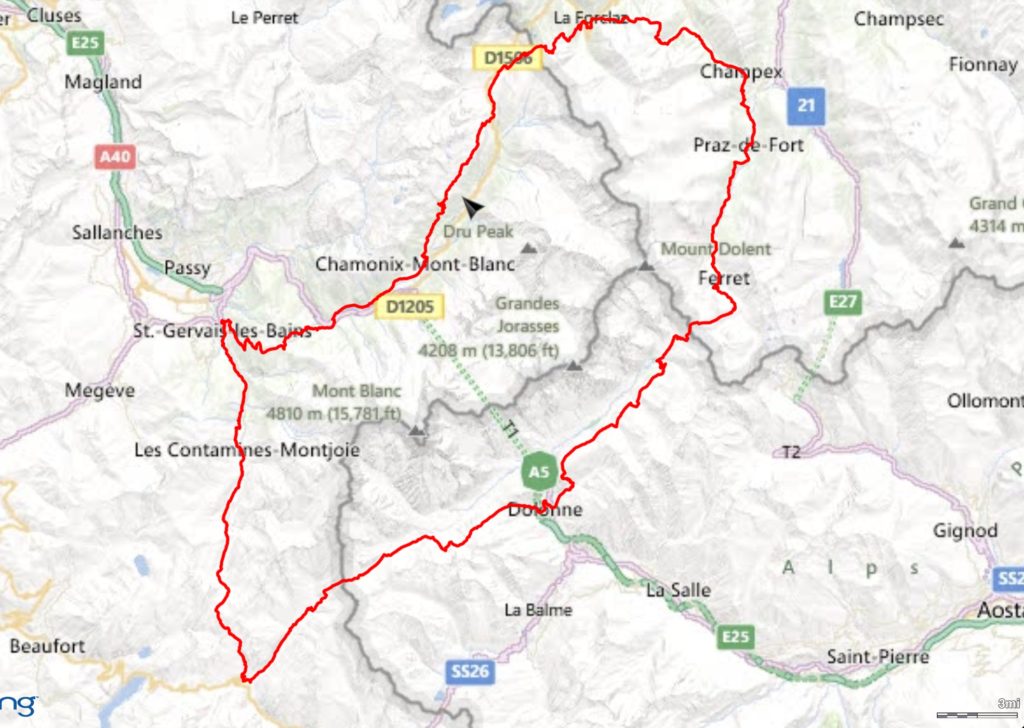
This UTMB race report keeps the adventure while pulling forward
the practical lessons on pacing, descents, fueling, sleep
deprivation, and alpine decision-making.
UTMB is not just a long race. It is a moving systems test: sleep
deprivation, altitude, temperature shifts, descents, fueling
discipline, emotional volatility, and the need to keep making
sound decisions after the body has been under pressure for many
hours.
The race report captures the atmosphere beautifully. What
stands out in retrospect is how much of the experience came down
to maintaining coherence while the course kept trying to
fragment it.
The core lesson:
in long mountain races, success depends less on one heroic
moment than on preserving decision quality for longer than the
course expects.
The race in one clinical sentence
UTMB is an exercise in managing cumulative stress. The body must
handle prolonged climbing, technical descents, cold at altitude,
sleep disruption, gastrointestinal uncertainty, and the
psychological drag of knowing there is still a great deal of
mountain left.
That is why the race is such a useful teacher. It exposes the
difference between raw fitness and full-spectrum readiness.
Pacing: restraint is not passivity
One of the enduring lessons from UTMB is that conservative
pacing is not a lack of ambition. It is a protection strategy.
Starting deliberately, preserving climbs, and refusing to get
caught in early race emotion creates space for better decisions
later.
In mountain ultras, pacing is not just about heart rate or
splits. It is about preserving muscular integrity, keeping
digestion usable, avoiding mental panic, and making sure the
second night does not become chaos.
Descents were not just faster, they were strategic
A major theme in the race report is how many places were
gained on descents. That is not accidental. Efficient descending
allows a runner to move quickly without paying the same
metabolic cost as forcing climbs too hard.
But downhill strength is not free speed. It requires tissue
resilience, footwork, confidence, and the ability to stay
organized when fatigue is already affecting coordination. The
practical lesson is that descending deserves targeted
preparation, not just courage.
Fueling and aid stations: small decisions become race
architecture
The report also makes something very clear: aid stations are not
just places to eat. They are points where the race can either be
stabilized or quietly derailed. What goes into the stomach, how
long one stops, whether a short nap is worth it, and when to
return to moving all have outsized effects.
food choices that seem attractive in the moment may not digest
well later
short naps can restore clarity if taken deliberately
carrying too much and carrying too little are both costly
late-race discipline often matters more than early-race
enthusiasm
Sleep deprivation changes the meaning of effort
Once a race extends deep into the night, the challenge changes.
The issue is no longer simply musculoskeletal strain. Sleep
deprivation alters emotional tone, perception of difficulty, and
the ability to judge what is actually wrong. This is where a
practiced calm becomes part of performance.
Long mountain races reward athletes who can recognize when they
are dealing with a true red flag versus a temporary collapse in
perspective.
Why the mountain atmosphere matters
One reason UTMB remains such a powerful race story is that it
carries the social and emotional texture of the event. The
start, the villages, the crowds, the alternation between
spectacle and solitude, and the sense of being held by a larger
mountain culture all matter.
That atmosphere is not fluff. It changes how effort is
experienced. It shapes morale, memory, and the feeling that
suffering belongs to something larger than discomfort alone.
UTMB is a physical challenge, but also a logistical and
psychological landscape. Understanding the course structure
changes how the effort feels.
What UTMB taught me that still applies clinically
A race like UTMB reinforces lessons that also matter in
medicine: recovery must be respected, stress accumulates in
layers, and the body performs best when the system as a whole is
coherent. Digestion, sleep, pacing, emotional regulation, and
strategy are never fully separate.
That is part of why endurance work still belongs on this site.
It is not merely autobiographical. It is another way of
understanding human physiology under load.