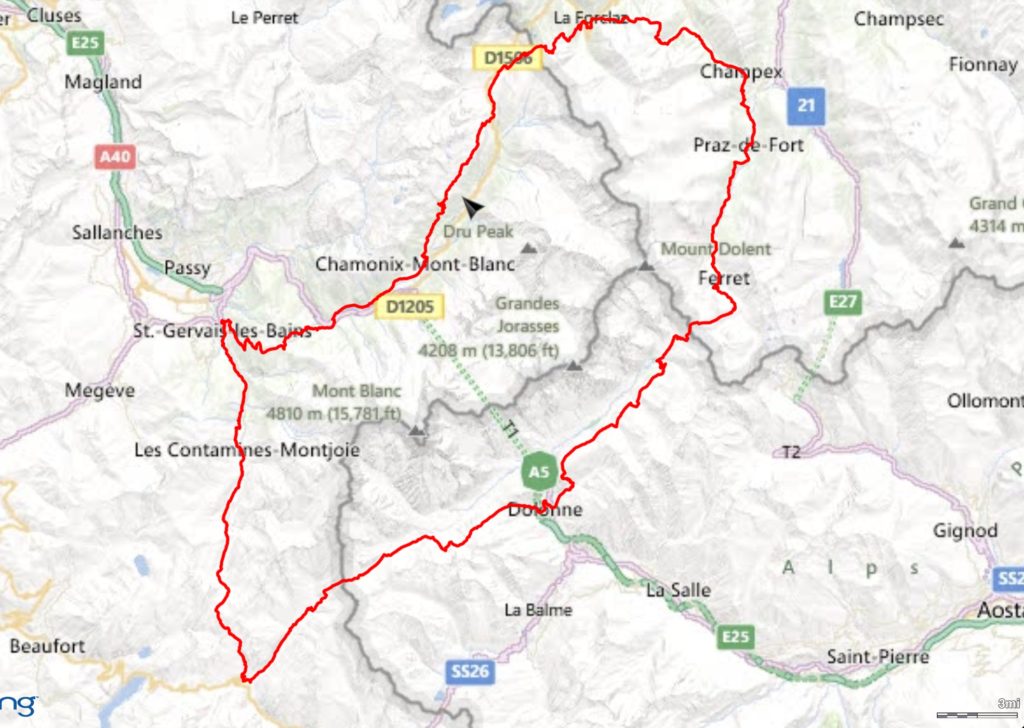
This article consolidates UTMB training into one practical map:
how to build the engine, support altitude and terrain, organize
fueling, respect mandatory gear, and keep the whole system
stable.
Preparing for UTMB is not only a mileage problem. It is a
systems problem. The body needs enough volume to finish, enough
climbing and descending to tolerate the terrain, enough
metabolic stability to fuel for a very long time, and enough
restraint to avoid arriving at the start already depleted.
Successful preparation depends on integration, not one heroic
training block.
The core principle:
UTMB preparation is not simply about doing more. It is about
matching training stress to the exact demands of the course.
Volume matters, but only if it serves the terrain
Weekly mileage can increase compared with earlier hundred-mile
preparation, but the more important change is how that volume is
distributed. More climbing, more technical terrain, more long
efforts carrying a real pack, and more time in environments that
resemble the Alps
made the difference.
That is the practical lesson: mileage has to become specific
enough that the race no longer feels foreign.
Alpine preparation is easier when the course is treated as a
real planning object rather than a distant event name.
Altitude and technical terrain change the training conversation
Training for UTMB asked for more than aerobic fitness. Altitude
exposure, steeper gradients, rougher footing, and longer
uninterrupted climbs all changed what “easy,” “hard,” and
“ready” meant. Carrying the intended pack during long mountain
runs was part of the preparation, not a small detail.
Specificity matters because alpine fatigue is not just
cardiovascular. It is muscular, postural, logistical, and
attentional.
Nutrition is not a side strategy
One of the strongest threads across the UTMB material is how
much thought had to go into fueling. The challenge was not just
calorie quantity. It was digestibility, portability, timing,
backup options, and deciding how much to carry between aid
stations.
long efforts must double as fueling rehearsals
simple foods and trusted gels beat novelty on race day
aid station planning starts long before the event
nutrition errors can look like pacing, mood, or muscular
problems later
Gear is not glamour, it is risk management
The gear articles make a point that remains relevant: in a race
like UTMB, mandatory gear is not bureaucracy for its own sake.
Conditions change quickly, rescue is expensive and difficult,
and the line between inconvenience and genuine exposure can get
thin very fast.
Clothing systems, waterproof layers, socks, lights, poles, pack
organization, and backup options are all part of staying safe
enough to keep performing.
Rest, logistics, and pre-race calm are part of training
The newscasts and preparation notes show something many runners
under-value: the final week is still part of performance. Sleep,
travel management, weather planning, gear checks, local runs,
and emotional containment all shape how the body arrives at the
start.
Rest is not what happens after training is done. In an event
like this, rest is one of the active ingredients of readiness.
The psychological side: reduce unknowns, protect confidence
Good preparation reduces avoidable uncertainty. Knowing the
course, understanding aid station gaps, testing layers in real
conditions, and practicing naps or long overnight efforts all
improve confidence because they make fewer situations feel new.
In a mountain ultra, confidence is not bravado. It is
familiarity under pressure.
What still holds up
The older UTMB posts remain valuable because they are concrete.
They do not speak in vague motivational language. They show how
a real race target forces a runner to think about terrain,
digestion, gear, logistics, weather, rest, and meaning all at
once.
That is why this series still deserves a place on the site: it
is both practical and human, and it reflects the kind of systems
thinking that also shapes the clinical work.