
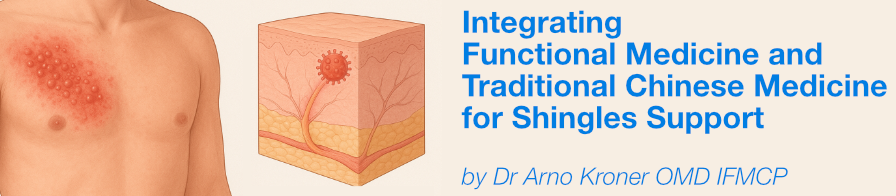
Integrating Functional Medicine and Traditional Chinese Medicine for Shingles Support
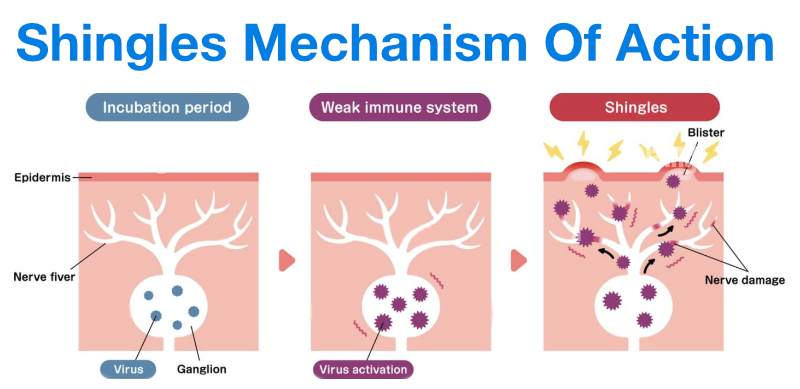
Shingles (herpes zoster) is a painful viral infection caused by the reactivation of the varicella-zoster virus (VZV), the same virus that causes chickenpox. Once VZV is reactivated, it travels along nerve pathways to the skin, causing a characteristic rash and often severe pain. While conventional treatment focuses on antiviral medications and pain relief, Functional Medicine and Traditional Chinese Medicine (TCM) offer distinct yet complementary approaches to support patients, aiming not only for symptom relief but also addressing the underlying factors contributing to the viral reactivation.
The Functional Medicine Approach: Targeting Root Causes and Immune Resilience
Functional Medicine (FM) views shingles as a manifestation of a deeper systemic imbalance, primarily a compromised immune system that allowed the dormant VZV to reactivate. The approach is highly personalized and focuses on identifying and correcting the root drivers of immune dysfunction, inflammation, and stress.
Immune System Optimization
The core FM strategy is to strengthen the body’s defenses against the virus, which is particularly relevant since VZV reactivation is often linked to a weakened immune state.
- Nutritional Support: FM emphasizes a nutrient-dense, anti-inflammatory diet. Key nutrients for antiviral and immune support include:
- Vitamins A, C, D, E, and B-complex: Essential for immune cell function and wound healing.
- Zinc: A vital mineral for immune modulation and antiviral activity.
- Lysine: An essential amino acid often recommended as a supplement to help inhibit VZV replication.4 A high-lysine, low-arginine diet may be suggested, as arginine is an amino acid that may support viral growth (found in foods like nuts, seeds, and chocolate).5
- Gut Health: Since the gut microbiome is intrinsically linked to immune function, FM often includes strategies to heal the gut lining and balance flora using probiotics, prebiotic fiber, and L-glutamine. Testing, such as a Comprehensive Stool Analysis, may be used to identify imbalances.
Inflammation and Nerve Pain Management
Functional approaches seek to reduce the systemic inflammation that drives nerve pain (neuralgia).
- Anti-inflammatory Diet: Limiting or avoiding refined carbohydrates, added sugars, processed foods, and food sensitivities (identified via testing) is crucial to dampen the inflammatory response.
- Targeted Supplements:
- Omega-3 Fatty Acids (EPA/DHA): Potent anti-inflammatory agents.
- Curcumin (from Turmeric): Helps reduce inflammation and pain.
- B12 and other B vitamins: Often used to support nerve health and potentially reduce neuropathic pain, including Post-Herpetic Neuralgia (PHN).
Stress and Adrenal Support
Chronic stress is a major trigger for VZV reactivation due to the immune-suppressing effects of elevated cortisol.
- Lifestyle Interventions: Prioritizing adequate, high-quality sleep and implementing stress-reducing practices (e.g., meditation, yoga, deep breathing) are fundamental.
- Adrenal Assessment: Testing adrenal function (e.g., cortisol levels) may be used to guide the use of adaptogenic herbs and lifestyle adjustments to restore a balanced stress response.
Functional Medicine Diet: Lysine vs. Arginine for Shingles
The Varicella-Zoster Virus (VZV) that causes shingles, like the Herpes Simplex Virus (HSV), is thought to require the amino acid Arginine for replication. Conversely, the amino acid Lysine may compete with Arginine for absorption and utilization by the virus, thereby inhibiting its ability to reproduce.
The goal during an active outbreak is to consume foods with a high Lysine-to-Arginine ratio and limit those with a low ratio.
High-Lysine (Virus-Inhibiting) Foods to Favor
These foods are generally protein-rich and should be prioritized, ideally in their whole, high-quality form (grass-fed, organic, pasture-raised).
|
Category |
Examples of High-Lysine Foods |
| Animal Proteins | 🥩 Beef, 🐔 Chicken, 🦃 Turkey, Lamb, Pork (lean cuts) |
| Dairy |
🧀 Cheese (especially Parmesan and Swiss), 🥛 Milk, Plain Yogurt (Greek or Skyr for higher protein) |
| Fish/Seafood | 🐟 Wild-caught Fish (Cod, Tuna, Salmon, Sardines, Haddock) |
| Eggs | 🥚 Pasture-raised eggs |
| Legumes |
Some beans, especially mung bean sprouts |
| Fruits & Veggies | Mangoes, Dried Apricots, Beets, Pears, Avocado |
High-Arginine (Virus-Supporting) Foods to Limit
These foods should be temporarily limited or avoided during an active shingles outbreak and potentially during periods of high stress if you are prone to recurrence.
| Category | Examples of High-Arginine Foods to Limit |
| Nuts & Seeds |
🥜 Almonds, Walnuts, Peanuts, Cashews, Pecans, Sesame Seeds, Sunflower Seeds, Pumpkin Seeds |
| Chocolate | 🍫 All forms of chocolate, especially dark chocolate and cocoa powder |
| Grains | Whole Wheat, Oats, Granola, Whole Grain Cereals, Gelatin, Coconut |
| Other |
Coconut (and coconut milk), Carob, Spirulina (blue-green algae) |
General Anti-Inflammatory & Immune Support
Beyond the Lysine-Arginine balance, Functional Medicine focuses on eliminating common inflammatory triggers and maximizing nutrients essential for the immune system and nerve repair.
Foods to AVOID (Pro-Inflammatory)
- Sugar and Refined Carbohydrates: High-glycemic foods (e.g., white bread, white rice, sugary drinks, candy) cause rapid blood sugar spikes, which can stress the immune system and increase inflammation.
- Processed Foods: Foods high in saturated fats, trans fats, and excess Omega-6 fatty acids (found in many vegetable/seed oils like corn, soy, and canola) promote systemic inflammation.
- Alcohol: Inhibits immune function and can interfere with sleep and liver detoxification.
Immune-Boosting Nutrients to MAXIMIZE
|
Nutrient |
Source |
Immune/Nerve Benefit |
| Vitamin C | Citrus fruits, bell peppers, broccoli, kale, kiwi | Enhances immune cell function and is a powerful antioxidant. |
| Zinc |
Oysters, red meat, pumpkin seeds, chickpeas |
Essential for T-cell function and overall immune response. |
| B Vitamins (especially B12) |
Eggs, meat, fish, cultured dairy |
Crucial for nerve health and repair (important for preventing Post-Herpetic Neuralgia). |
| Vitamin D |
Fatty fish, egg yolks, fortified foods, sunlight |
A powerful immune modulator. |
| Omega-3 Fats | Fatty fish (salmon, sardines), flaxseeds, walnuts | Reduces inflammation throughout the body. |
By adopting this targeted dietary approach, the patient actively supports their immune system’s fight against VZV and helps reduce the inflammatory burden that drives the pain and discomfort of shingles.
The Traditional Chinese Medicine (TCM) Approach: Restoring Balance and Flow
TCM views shingles, or shé chuāng (snake sore), as an external manifestation of underlying internal disharmony. The common diagnoses relate to excess Damp-Heat or Liver Fire, often compounded by a deficiency (like Qi or Blood stagnation), especially in chronic cases like PHN. Treatment aims to clear the heat, drain the dampness, resolve toxicity, and move Qi and Blood.
Acupuncture and Moxibustion
Acupuncture is a cornerstone of TCM for shingles, providing both acute relief and addressing the root cause.
- Acute Pain Relief: Acupuncture points are selected to clear heat, reduce inflammation, modulate pain signals (releasing natural painkillers like endorphins), and promote local circulation to the affected dermatome (nerve path).
- Preventing PHN: Studies suggest that early and consistent acupuncture treatment may reduce the incidence and severity of Post-Herpetic Neuralgia (PHN), the prolonged nerve pain after the rash heals.
- Restoring Flow: Needles stimulate the flow of Qi (life force energy) and Blood along the meridians, addressing stagnation caused by the viral attack.
Herbal Medicine
Customized herbal formulas are prescribed based on the individual’s TCM diagnosis (e.g., Liver Fire versus Damp-Heat).
- Clearing Heat and Toxicity: Herbs like Long Dan Cao (Gentiana) are used in formulas like Long Dan Xie Gan Tang to clear Liver Fire and Damp-Heat, which corresponds to the intense redness and burning pain.
- Antiviral and Anti-inflammatory Action: Specific herbs may have properties to help resolve the underlying viral toxicity and inflammation.
- Addressing Deficiency: In the recovery phase or for PHN, herbs may be added to nourish the Blood and strengthen the Qi (immune system), supporting nerve repair and overall vitality.
Topical and Adjunctive Therapies
TCM also employs external techniques for local symptom relief and healing.
- Topical Herbs/Pastes: Herbal washes or topical applications are used to dry the blisters, reduce itching, and promote skin healing.
- Cupping and Moxibustion: May be used to move stagnation and warm the area, though avoided directly on acute lesions.
TCM Herbal Formulas for Shingles: Clearing Heat and Dampness
In TCM, the initial, severe phase of shingles is often categorized as an Excess Pattern, most commonly Damp-Heat with Fire Toxicity (especially if the rash is intensely red, blistered, and accompanied by burning pain). The primary therapeutic principle is to Clear Heat, Resolve Fire Toxicity, and Drain Dampness.
Here are three classic TCM herbal formulas often used, which would typically be modified by a licensed practitioner based on the patient’s specific symptoms and constitution.
Long Dan Xie Gan Tang (Gentiana Longdancao Decoction to Drain the Liver)
This is one of the most widely used and effective formulas for clearing extreme excess heat and dampness, particularly when the pathology affects the Liver and Gallbladder channels (which commonly run along the side of the body, a frequent location for shingles).
| Key Herbs | Primary Action | Shingles Symptoms Addressed |
| Long Dan Cao (Gentiana) | Drains Fire and clears Damp-Heat from the Liver/Gallbladder. | Intense burning pain, red rash, rapid onset. |
| Huang Qin (Scutellaria) & Zhi Zi (Gardenia) | Clear heat and dry dampness. | Systemic heat, restless sleep, irritability. |
| Ze Xie (Alisma) & Mu Tong (Akebia) | Drain Dampness via urination. | Helps clear the toxins causing the blisters and exudate. |
TCM Application: Used for shingles with severe burning pain, high fever, irritability, and a rash that is bright red and potentially weeping or blistered.
Chai Hu Shu Gan San (Bupleurum Powder to Soothe the Liver) (As a Modification)
While the initial phase is usually Excess Heat, some patients may have shingles triggered by emotional stress or Liver Qi Stagnation, leading to the Heat rising quickly. This formula can be used as a base or modification to address the Qi constraint that often precedes the outbreak.
| Key Herbs | Primary Action | Shingles Symptoms Addressed |
| Chai Hu (Bupleurum) | Spreads Liver Qi and relieves constraint. | Stress-related triggers, tight muscles, irritability. |
| Chuan Xiong (Ligusticum) & Bai Shao (Peony) | Invigorate blood and regulate pain. | Sharp, fixed pain; aids in the resolution of the Qi and Blood stagnation caused by the viral attack. |
| Zhi Ke (Citrus) | Promotes the movement of Qi. | Distention or feeling of fullness near the rash site. |
TCM Application: Used when the patient reports the outbreak followed significant stress, or when the pain is stabbing and accompanied by noticeable tension and emotional fluctuations.
Liang Xue Jie Du Tang (Cool the Blood and Resolve Toxicity Decoction) (Topical or Internal)
This formula and its variations are focused heavily on the toxin-clearing aspect, which relates directly to the virulent nature of the VZV attack on the skin and nerves.
| Key Herbs |
Primary Action |
Shingles Symptoms Addressed |
| Jin Yin Hua (Honeysuckle) & Lian Qiao (Forsythia) | Clear Heat and resolve Fire Toxin (strong antiviral effect). | General fever, red and inflamed lesions. |
| Pu Gong Ying (Dandelion) | Clears Heat and resolves toxicity, specifically targeting lesions. | Reduces swelling, redness, and inflammation in the rash area. |
| Sheng Di Huang (Rehmannia) | Cools the Blood and Nourishes Yin. | Counteracts the “scorching” effect of the Heat Toxin and aids recovery. |
TCM Application: Most useful for the period when the blisters are active and the toxins need to be rapidly expelled. Often used in conjunction with other formulas or applied externally as a wash or paste.
🚨 A Note on TCM and Post-Herpetic Neuralgia (PHN)
Once the acute rash heals, shingles often progresses to Post-Herpetic Neuralgia (PHN), which TCM views as a chronic condition of Stagnation (of Qi and Blood) combined with Deficiency (of Qi or Yin) in the nerve pathways. Formulas shift from clearing excess heat to nourishing the Blood, moving the Qi, and invigorating circulation (e.g., using herbs like Dang Gui and Chi Shao) to repair the damaged nerves and alleviate chronic, sharp pain.
An Integrated Healing Model
An integrative approach—combining Functional Medicine and TCM—offers a comprehensive strategy for shingles:
| Goal | Functional Medicine Contribution | TCM Contribution |
| Addressing Root Cause |
Identify and correct immune system dysfunction (nutrients, gut health). |
Diagnose and treat underlying energetic imbalance (Liver Fire, Damp-Heat). |
| Viral/Immune Support | Targeted supplementation (Lysine, Zinc, Vitamins). | Specific antiviral and immune-modulating herbal formulas. |
| Pain & Inflammation | Anti-inflammatory diet and supplements (Omega-3s, Curcumin). | Acupuncture for immediate pain relief and anti-inflammatory neuro-modulation. |
| Long-Term Recovery | Stress management, sleep optimization, addressing B vitamin deficiencies for nerve health. | Nourishing Qi and Blood to prevent PHN and restore vitality. |
By addressing the illness on multiple fronts—from the micronutrient level of the immune system to the energetic flow of the body—patients with shingles can find significant relief, experience faster resolution of the rash, and potentially reduce the risk of the debilitating long-term complication of Post-Herpetic Neuralgia.

Author
Dr Arno Kroner
OMD LAc IFMCP