

The Body’s Wisdom: Shared Principles of Chinese and Functional Medicine
Chinese Medicine (CM), also referred to as Eastern Medicine, and Functional Medicine (FM) represent two distinct yet philosophically aligned medical systems that emphasize root-cause analysis, individualized care, and the body’s inherent capacity for self-regulation and healing. Although originating from different historical and cultural contexts, both systems prioritize prevention, systems-based thinking, and the therapeutic use of nutrition, lifestyle modification, and non-pharmacologic interventions.
This article explores the philosophical foundations, diagnostic frameworks, and therapeutic strategies of Chinese Medicine and Functional Medicine, highlighting how each system can be applied independently or integrated synergistically to optimize health outcomes. The goal is to enhance patient education, promote proactive engagement in health management, and foster a deeper understanding of the complex interactions between mind, body, and environment. Integrating CM and FM offers a comprehensive, adaptable model for modern clinical care and population health.
Foundations and Core Principles
The Rise of Holistic Health
The prevalence of chronic, non-communicable diseases has risen dramatically in the modern era, driven largely by lifestyle factors, environmental exposures, and chronic psychosocial stress. While conventional biomedical approaches excel in acute and emergency care, they often provide limited solutions for multifactorial chronic conditions. This limitation has contributed to increasing interest in holistic and integrative medical models that emphasize prevention, personalization, and long-term resilience.
Chinese Medicine, with a clinical history spanning several millennia, and Functional Medicine, a contemporary systems-based discipline, both offer comprehensive frameworks for understanding health and disease beyond symptom suppression. CM conceptualizes health as the harmonious circulation of Qi and Blood within an interconnected organ system, while FM applies principles of systems biology to identify and address underlying physiological dysfunctions. Together, these models offer complementary perspectives well suited to the complexities of 21st-century healthcare.
Philosophical Foundations
Core Concepts of Chinese (Eastern) Medicine
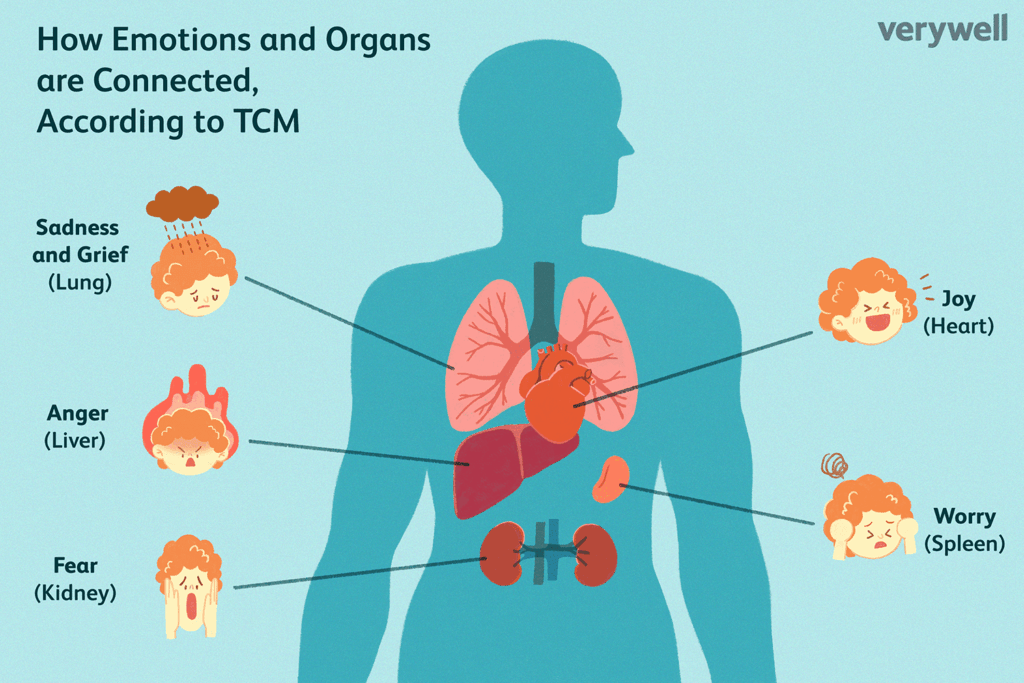
Central to CM is the dynamic balance of Yin and Yang, representing opposing yet interdependent forces that sustain physiological equilibrium (homeostasis). The Five Element framework—Wood, Fire, Earth, Metal, and Water—further describes functional relationships among organ systems and their interactions with environmental and emotional factors.
Qi, often translated as vital energy, circulates through meridians and supports all physiological processes. Disease is understood as a disruption of this balance, manifesting as identifiable patterns of disharmony. Emotional stressors, climate, diet, and social context are integral contributors to health, reflecting CM’s emphasis on environmental and psychosomatic influences.
Foundational Principles of Functional Medicine
Functional Medicine adopts a patient-centered, systems-oriented approach that seeks to identify and address the root causes of disease rather than focusing solely on symptom management. It integrates clinical history, lifestyle assessment, and advanced laboratory testing to evaluate interconnected physiological systems such as gastrointestinal function, immune regulation, detoxification, hormonal balance, and mitochondrial health.
Nutrition, environmental exposures, physical activity, sleep, and psychosocial stress are considered foundational determinants of health. FM emphasizes the interconnected nature of biological systems, recognizing that dysfunction in one domain can propagate throughout the body.
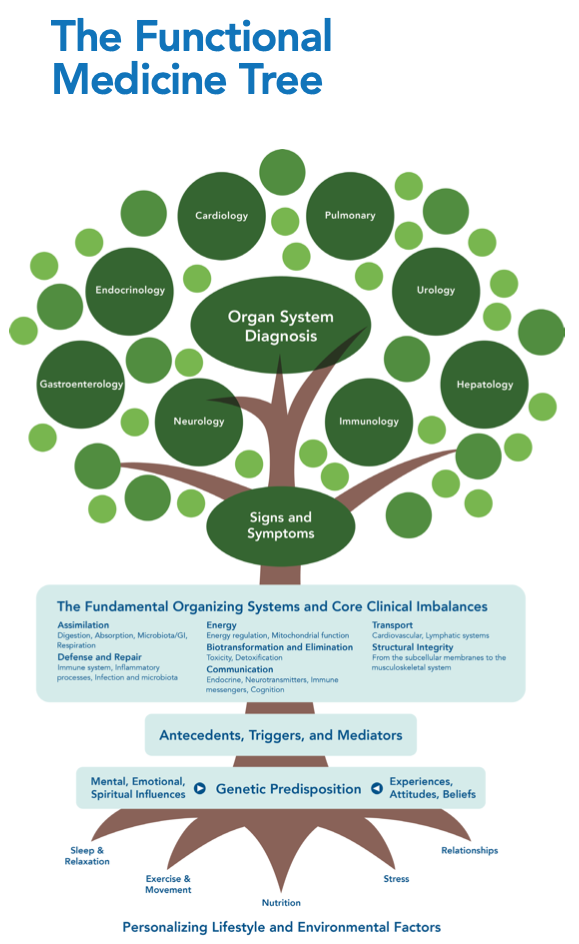 image: IFM
Shared Principles and Conceptual Overlap
Despite differing terminologies and methodologies, CM and FM share several foundational principles:
- Recognition of the body’s innate capacity for healing
- Emphasis on prevention and early intervention
- Individualized treatment based on unique patient patterns
- Systems-based understanding of health and disease
- Integration of lifestyle, nutrition, and environmental factors
Both frameworks view health as an emergent property of balanced, well-regulated systems and acknowledge the inseparability of physical, emotional, and environmental influences.

Diagnostic Approaches
Diagnostic Frameworks in Chinese Medicine
Diagnosis in CM is a comprehensive and highly individualized process incorporating observation, inquiry, listening, and palpation. Pulse diagnosis provides insights into organ system function and Qi dynamics, while tongue examination offers visual markers of internal imbalance. These findings are synthesized through pattern differentiation, which identifies the root disharmony underlying a patient’s clinical presentation.
Functional Medicine Diagnostics
Functional Medicine relies on detailed patient histories, timeline analysis, and advanced laboratory testing to assess biomarkers, genetics, metabolic function, and the microbiome. These objective measures help identify triggers, mediators, and perpetuating factors of disease, allowing for targeted intervention strategies.
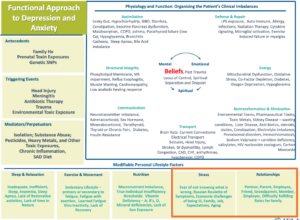
image: IFM
Comparative Perspective
While CM diagnostics are often described as qualitative and experiential, and FM diagnostics as quantitative and data-driven, both aim to understand the whole person. CM pattern recognition and FM root-cause analysis are complementary approaches that, when combined, can provide a more nuanced and comprehensive clinical assessment.
Therapeutic Interventions
Treatment Modalities in Chinese Medicine
CM employs a wide array of therapeutic interventions, including acupuncture, herbal medicine, moxibustion, cupping, Tui Na massage, and dietary therapy. These modalities aim to restore physiological balance, regulate Qi and Blood, and support organ system function. Lifestyle practices such as Qi Gong and Tai Chi are integral components of long-term health maintenance.
Functional Medicine Interventions
Functional Medicine treatments focus on correcting underlying dysfunctions through personalized nutrition plans, targeted supplementation, stress reduction, sleep optimization, physical activity, detoxification support, immune modulation, and hormonal regulation. Interventions are typically phased and adjusted based on clinical response and follow-up testing.
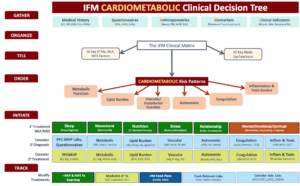
image: IFM
Integrative Applications: East Meets West
When combined thoughtfully, CM and FM can offer highly effective integrative treatment strategies. Acupuncture may be paired with nutritional and microbiome-focused interventions for chronic pain, digestive disorders, or stress-related conditions. Functional testing can inform and refine Chinese herbal prescriptions, enhancing precision and clinical relevance.
Shared focus areas such as gut health, stress physiology, inflammation, and metabolic regulation lend themselves particularly well to integrative care. For example, patients with irritable bowel syndrome may benefit from acupuncture and herbal therapy alongside dietary modification and stress management protocols derived from FM.
Distinct Strengths and Clinical Considerations
While overlapping significantly, CM and FM also maintain distinct clinical strengths. CM often provides rapid symptom relief in conditions such as pain syndromes, menstrual irregularities, and emotional dysregulation. FM may be particularly effective for complex chronic conditions, including autoimmune disease, metabolic disorders, and multisystem dysfunction.
Treatment timelines, symptom interpretation, and therapeutic priorities may differ between systems. Optimal care often involves selecting or integrating modalities based on the patient’s clinical presentation, preferences, and long-term goals.
Practical Applications and Future Directions
Integrated Case Applications
Clinical cases illustrate how CM patterns frequently correlate with FM laboratory findings, particularly in areas such as digestive dysfunction, stress physiology, and inflammation. Diagnostic tools such as tongue examination often parallel biochemical and functional assessments, reinforcing the complementary nature of both systems.
The Future of Integrative Medicine
The future of healthcare increasingly lies in collaborative, interdisciplinary models that integrate Eastern and Western paradigms. Ongoing research, evidence-based validation, and practitioner cross-training are essential to advancing integrative medicine. Technologies that support data sharing, personalized care plans, and patient education will further enhance this evolution.
Empowering Patients Through Holistic Care
Patients can incorporate principles from both CM and FM by adopting health-supportive lifestyles, managing stress, and seeking individualized care from appropriately trained practitioners. Understanding the interconnectedness of mind, body, and environment empowers individuals to take an active role in maintaining health and addressing chronic illness.
Conclusion: A Unified Vision for the Future of Health
The convergence of Chinese Medicine and Functional Medicine represents more than a simple combination of two distinct modalities; it signifies a fundamental shift toward a more sophisticated, systems-based paradigm of care. By bridging the ancient, experiential wisdom of the East with the modern, biochemical precision of the West, we move away from a reductionist “pill for an ill” approach and toward a truly personalized model of medicine.
Ultimately, both frameworks affirm that health is not merely the absence of disease, but a dynamic state of harmony between the individual’s internal physiology and their external environment. As the global burden of chronic disease continues to grow, this integrative model provides a vital roadmap for clinical resilience. By empowering patients with the tools of self-regulation—ranging from acupuncture and herbal support to nutritional genomics and stress management—we can foster a healthcare system that is proactive, restorative, and deeply rooted in the body’s innate wisdom.
Author
Dr Arno Kroner
OMD LAc IFMCP