
The Metal Element and Your Immune Blueprint: A Deep Dive into Zinc
In both Functional Medicine and Traditional Chinese Medicine (TCM), we often look at the same physiological goal—vitality and resilience—through two different but harmonious lenses. Today, we’re focusing on a true “multitasker” in the world of micronutrients: Zinc.
In my practice, I don’t just look at isolated lab values; I explore the systems behind your symptoms. Zinc is a perfect example of a nutrient that bridges the gap between biochemical pathways and energetic balance.
The Functional Medicine Perspective: The Enzyme Master
From a functional standpoint, zinc is an essential trace mineral involved in over 300 enzymatic reactions. It is a cornerstone of Immune Signaling, Gut Integrity, and Hormonal Health.
- Immune Intelligence: Zinc isn’t just an “immune booster”; it’s an immune regulator. It supports the development and function of T-lymphocytes and keeps the “cytokine storm” in check by managing inflammation.
- The Gut Barrier: We often discuss “Leaky Gut” in the clinic. Zinc is crucial for maintaining the “tight junctions” in your intestinal lining, preventing toxins and undigested food from crossing into the bloodstream.
- Metabolic & Hormonal Support: Zinc plays a role in insulin storage and secretion, making it vital for blood sugar regulation. In men’s health, it is a key precursor for testosterone production and prostate health.
-
Sulfates and Zinc: High intake of dietary sulfates can occasionally interfere with the absorption of certain trace minerals.
-
The SUOX Connection: Zinc is a cofactor for several enzymes involved in sulfur metabolism. If you are “dumping” water due to sulfate sensitivity (certain waters, wine, dried fruits, condiments), you may actually have a higher turnover of zinc to support the mucosal repair of the intestinal lining.
The TCM Perspective: Strengthening the “Wei Qi”
In TCM, we categorize the body’s functions into elements and organ systems. Zinc resonates deeply with the Metal Element, which governs the Lung and Large Intestine systems.
- Defensive Qi (Wei Qi): Think of Wei Qi as your body’s energetic shield. The Lungs are responsible for circulating this protective energy just below the skin. A “zinc deficiency” often manifests in TCM as a Wei Qi Deficiency, making you more susceptible to “External Pathogenic Factors” like Wind and Cold (viruses and allergies).
- The Lung-Large Intestine Axis: Zinc’s dual role in respiratory health and gut integrity mirrors the TCM connection between the Lungs and the Large Intestine. When one is weak, the other often follows.
- Skin and Healing: The Metal element also governs the skin. Zinc is legendary for wound healing and resolving “Damp-Heat” skin conditions like acne or eczema.
Integrating the Root Cause
Whether we are addressing LV Qi Stagnation leading to digestive distress or looking at Mitochondrial health to combat fatigue, zinc is frequently part of the “blueprint.” If you find yourself catching every cold that goes around, or if your digestion feels sluggish (what we might call Spleen Qi Deficiency), your zinc levels may be the missing piece of the puzzle.
Are zinc levels in blood tests reflective of mitochondrial zinc and overall zinc in the body?
No. A standard blood test (serum or plasma zinc) is not a reliable reflection of mitochondrial zinc or your body’s total zinc stores.
While serum zinc is the most common clinical test, it represents only about 0.1% of the zinc in your body. Because the body works very hard to keep blood levels stable, your blood test can look “normal” even if your cells and mitochondria are significantly depleted.
1. Serum Zinc vs. Total Body Zinc
Zinc is primarily an intracellular mineral. It is distributed throughout your tissues rather than floating freely in your bloodstream.
-
Where Zinc Lives: Approximately 60% is in skeletal muscle and 30% is in bone.
-
The “Homeostatic Buffer”: Your body will pull zinc out of tissues and bones to maintain blood levels. This means a serum test only catches a deficiency when it is severe enough that your “backup tanks” are empty.
-
Sensitivity: Research shows that doubling your zinc intake might only change your serum levels by about 6–9%, making it a poor marker for tracking minor changes in nutritional status.
2. Mitochondrial Zinc
The relationship between blood zinc and mitochondrial zinc is even more distant.
-
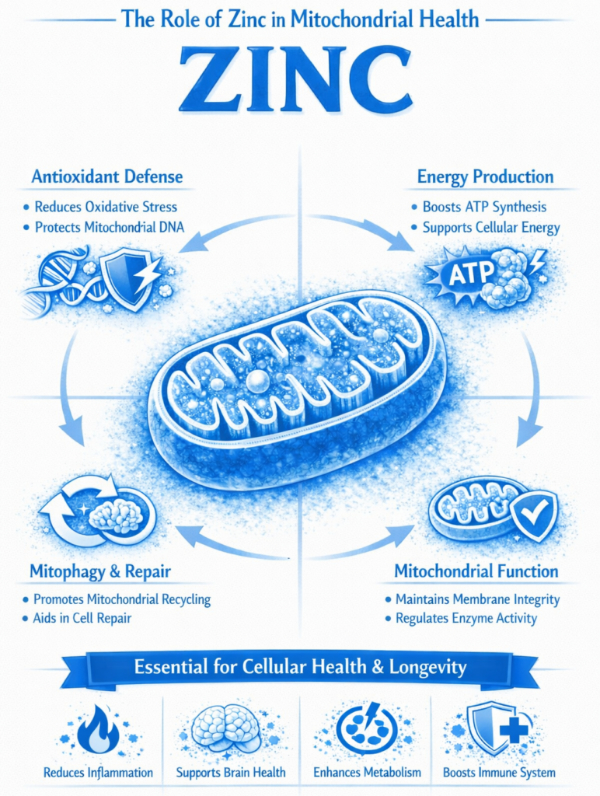
Sequestration: Mitochondria act as a “sink” or storage site for zinc. They have specific transporters (like ZIP and ZnT families) that pump zinc in and out based on the cell’s immediate metabolic needs, independent of what is happening in the blood.
-
Function: Within the mitochondria, zinc is bound to proteins for energy production and antioxidant defense. If your blood zinc is low, the cell may prioritize keeping mitochondrial zinc stable to prevent cell death, or conversely, mitochondrial dysfunction might occur long before a blood test shows a “low” result.
3. Better Alternatives for Testing
If you are looking for a more accurate picture of your zinc status, consider these options:
| Test Type | What it Measures | Accuracy Level |
| Serum/Plasma Zinc | Zinc in the liquid part of the blood. | Low: Good for severe deficiency only; affected by inflammation and time of day. |
| RBC Zinc | Zinc inside red blood cells. | Medium-High: Better reflection of intracellular status over the last 3-4 months. |
| White Blood Cell (WBC) Zinc | Zinc in neutrophils or lymphocytes. | High: Very sensitive to early-stage deficiency, but rarely available in standard labs. |
| Alkaline Phosphatase (ALP) | A zinc-dependent enzyme. | Supportive: If your zinc is low AND your ALP is at the bottom of the range, it’s a strong sign of functional deficiency. |
Navigating Zinc: Forms and Dosages for Optimal Vitality
As we discussed, zinc is a cornerstone of both the Metal Element in TCM and enzymatic health in Functional Medicine. However, the form of zinc you choose and how much you take can significantly impact its effectiveness and how your body—specifically your “Spleen Qi” or digestive system—handles it.
Choosing the Right Zinc “Salt”
In functional medicine, we look for “chelated” forms where zinc is bound to an organic acid. This mimics how zinc is found in food, making it easier for the gut to recognize and absorb without causing the “Dampness” or nausea often associated with cheaper inorganic salts.
|
Form |
The Functional/TCM Benefit |
Best Use Case |
|
Zinc Picolinate |
Highest absorption rate; crosses the cell membrane efficiently. |
Targeted correction of deficiency or chronic skin issues (acne/eczema). |
|
Zinc Bisglycinate |
Gentle on the stomach; bound to glycine (a calming amino acid). |
For those with sensitive digestion or “Spleen Qi” deficiency. |
|
Zinc Citrate |
Well-absorbed and often has a better flavor in liquids/syrups. |
General wellness and pediatric support. |
|
Zinc Gluconate |
Commonly found in lozenges; excellent for local immune action. | Early-stage “Wind-Cold” (sore throat/initial cold symptoms). |
|
Zinc Oxide |
Often poorly absorbed (around 50%); can be heavy on the gut. |
Primarily used topically for skin protection (non-systemic). |
Dosage Recommendations
Zinc follows a “U-shaped” curve: too little leads to Wei Qi (immune) deficiency, but too much can deplete other vital minerals, particularly copper.
1. Daily Maintenance (Tonifying)
For general support and to maintain the integrity of the Metal element (Lungs/Gut):
- Adult Men: 11–15 mg daily.
- Adult Women: 8–12 mg daily.
- Vegetarians/Vegans: May require up to 50% more due to phytates in grains that block absorption. Try Soaking or sprouting grains—to reduce phytic acid and “liberate” the zinc.
2. Therapeutic Support (Acute)
When the “External Pathogens” have already breached the surface (colds, flu, or flare-ups):
- Acute Dose: 30–50 mg daily for a short duration (usually 1–2 weeks).
- Note: If taking more than 30 mg for more than a month, we typically recommend a formula balanced with a small amount of Copper (usually a 15:1 ratio) to maintain mineral harmony. Cu and Zn compete for the same receptors and pathways.
3. The “Pulse” Strategy
In TCM, we often “pulse” supplements rather than taking them indefinitely. For zinc, taking it during the Fall season (the time of the Metal Element) or during times of high stress can provide the most benefit without overloading the system.
Clinical Safety Tip
Always take zinc with a meal—ideally one containing some protein—to minimize “stomach heat” or nausea. Avoid taking it at the exact same time as high-dose calcium or iron supplements, as these minerals compete for the same “gateways” in your gut.
In health and harmony,